
The confluence of sophisticated social media promotion, high-risk cryptocurrency speculation, and enduring financial vulnerability has created fertile ground for modern pyramid schemes, one of the most prominent recent examples being the global scam known as Lion’s Share. This scheme, which resulted in significant financial and community devastation, offers a stark warning about the evolving nature of digital fraud.
At the center of the New Zealand arm of this international deception was Shelly Cullen, a Kiwi woman who promoted the scheme with a “brazen disregard for potentially vulnerable consumers”. Cullen achieved notoriety for her audacious claims, stating publicly, “I am going to make history as one of the biggest scammers in New Zealand,” and boasting, “I jump from scam to scam because I can”. Her conviction for promoting Lion’s Share highlights a dangerous new frontier in illegal pyramid selling, where the illusion of decentralized, rapidly generated crypto wealth masks a classic, devastating fraud structure.
CASE SUMMARY: Promises and the Global Collapse
Lion’s Share was a global cryptocurrency-based pyramid scheme promoted extensively in New Zealand during 2020 and 2021. It encouraged people to join by paying hundreds of dollars in hopes of being rewarded with cryptocurrencies from each new person they signed up. The scheme was purportedly based on cryptocurrency trading systems like “Etherium” and “Tron”.
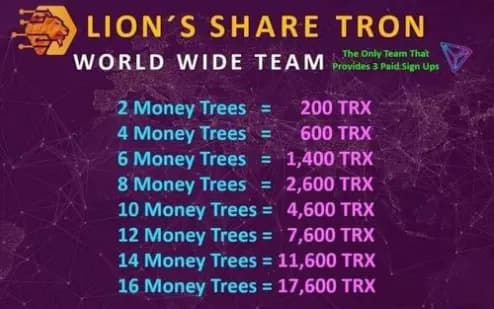
The project’s marketing, heavily reliant on online meeting sessions and YouTube videos, painted a picture of quick, massive profits. Cullen herself claimed staggering returns, including having earned more than $150,000 in just 11 days in August 2020, and $204,000 within five weeks by September 2020. In one video, she suggested that while there was risk, “risk is the new safe”.
Crucially, the promotion of Lion’s Share in New Zealand targeted Māori and Pasifika communities. The Salvation Army raised concerns about the scheme, noting that it looked similar to manipulative scams targeting vulnerable people in South Auckland. The allure was often presented as a quick fix for complex social issues and poverty.
The inevitable collapse of the scheme resulted in widespread losses: approximately 150,000 participants worldwide lost a total of almost NZ$17 million. Financial analysis confirmed the devastating scale of the damage, finding that a staggering 83% of participants lost money from the global scheme.
SCAM MECHANISM (CORE FOCUS): Exploiting Decentralization
Pyramid schemes are illegal in New Zealand under the Fair Trading Act because they are fraudulent ways to make money based on recruiting an ever-increasing number of investors, rather than selling legitimate goods or services. The Commerce Commission (ComCom) deemed Lion’s Share to be one of the biggest pyramid schemes it had ever seen promoted in the country.
The core deception of Lion’s Share lay in its mechanism: it did not appear to have any way to generate profits other than by receiving funds from subsequent investors, which were termed “commissions”. The structure, where initial promoters recruit more investors who, in turn, recruit more, resembles a pyramid, which eventually runs out of people to recruit and collapses, leaving latecomers out of pocket.
The use of cryptocurrency allowed the scheme to evolve, giving it the appearance of a legitimate, revenue-generating opportunity in a high-tech field. However, analysis revealed the brutal zero-sum nature of the operation:
- Of the participants on the Tron platform (over 116,000 people), only 12.4% were classified as “winners,” while 83.6% were “losers”.
- The financial gains were hyper-concentrated: the top 1% of participants made 92.2% of the total profit.
- In total, the winners made $10.363 million between them, while the vast majority of losers lost $10.509 million. This stark distribution illustrates how the scheme functions not as an investment, but as a wealth transfer system from the bottom tiers to the very top.
WARNING SIGNS (RED FLAGS)
The Lion’s Share case provides several critical red flags that consumers, especially those interested in volatile crypto markets, should recognize:
- Recruitment-Centric Business Model: The primary method of making money was dependent on enrolling new members and collecting their initial fees or “commissions,” rather than selling an actual, valuable product or service. If asked to recruit others, and if that recruitment is the main source of income, the opportunity should be highly scrutinized.
- Exaggerated and Unrealistic Profit Claims: Cullen’s claims of earning hundreds of thousands of dollars in mere weeks were grossly out of step with realistic investment returns, particularly for the vast majority of participants. The Commerce Commission urges consumers that if an opportunity “looks too good to be true, it probably is”.
- Appeals to Emotion and Esoteric Financial Concepts: Promoters employed highly charismatic language focused on attracting wealth and generating “energy”. In a promotion for a subsequent scheme, a promoter described the proposal as a “tool that attracts money” and encouraged attendees to get into the “vibration of attraction to wealth,” which is a hallmark of schemes that lack tangible economic basis.
- Lack of Transparency and Regulation: Lion’s Share was an unregulated entity. The Commerce Commission emphasized that pyramid schemes are illegal under the Fair Trading Act. The FMA specifically warns that cryptocurrencies are high-risk, speculative products.
- Promoter’s Disregard for Law/Fugitive Status: Cullen’s public statements, such as her willingness to “jump from scam to scam” and her casual dismissal of the maximum fine as merely a “$600,000 slap on the hand,” were clear warnings of a profound ethical and legal disregard. Furthermore, her eventual failure to attend her own trial and her believed status as being overseas underscore the fundamental dishonesty of the operation.

CONSEQUENCES & LEGAL STATUS: A Record Fine and Continued Threat
Following an investigation by the Commerce Commission (ComCom), Shelly Cullen was successfully prosecuted and convicted in the North Shore District Court on five charges related to the promotion of Lion’s Share under the Fair Trading Act. The trial proceeded without her attendance, as she is believed to have left New Zealand.
Despite her absence, the Auckland District Court sentenced Cullen and ordered her to pay a total of $5.9 million in penalties. This significant amount was composed of two parts: a $600,000 criminal fine (which matches the maximum fine under the FTA for promoting a pyramid scheme and is the largest criminal fine ever issued to an individual under the Act) and an order to pay more than $5.3 million to reflect the value of the commercial gain she made through the scheme.
The record fine reflected the “highest end” of harm caused by the pyramid scheme and was specifically designed to ensure the consequences outweighed the gains Cullen had made from her offending. The Commerce Commission confirmed it was determined to see the case through, even with Cullen overseas, and is taking steps to contact international agencies regarding her scheduled sentencing date.
Critically, the threat posed by Cullen and her methods has not diminished. Even after her conviction, the Commerce Commission and the Financial Markets Authority (FMA) alleged that Cullen is linked to promoting a new investment opportunity known as ‘MaVie’. MaVie is a bitcoin-based scheme that is also allegedly linked to entities such as Ultron Foundation, LottoDay, FlipMe, and FinUp.
Online meetings promoting MaVie have attracted over 200 potential investors, who again appeared to come largely from the same Māori and Pasifika communities targeted by Lion’s Share. Promoters of MaVie used aggressive forecasts, suggesting a $1000 initial investment could hypothetically grow to $1.2 million in five years, a projection that would, in reality, require continuous monthly deposits and an unsustainable 8% monthly compounding interest rate. The FMA also warns that Cullen is the Director of Dvyneways Limited, which offers cryptocurrency-loaded payment cards, but is not registered to provide financial products or services.
WRITER’S COMMENTARY: The Price of Audacity
The success of Lion’s Share and the subsequent promotion of MaVie can be traced to two core causal factors. First, the sophisticated adoption of cryptocurrency terminology provided a crucial veil of legitimacy, allowing the scheme to exploit the widespread excitement and lack of technical knowledge surrounding decentralized finance. For communities struggling with complex social issues, these schemes offered a narrative—backed by impressive-sounding but meaningless financial jargon—that presented a quick fix and an escape from poverty. Second, the audacity of the lead promoter, Shelly Cullen, generated significant, if negative, attention. Her willingness to openly challenge the legal system and dismiss a $600,000 fine as inconsequential sent a clear message to potential recruits that the risks were worth taking and the system was toothless.
To effectively combat these evolving digital pyramid schemes, a multi-pronged regulatory and technological approach is required.
- Increased Commercial Gain Penalties: While the $5.9 million order against Cullen is significant, the maximum criminal fine of $600,000 was cited by Cullen herself as a “slap on the hand”. Regulators must push for legal amendments that dramatically increase the maximum criminal penalties for promoting pyramid schemes under the Fair Trading Act, ensuring that the punitive consequences always outweigh the potential commercial gains for high-level promoters, regardless of the difficulty in collection.
- Mandatory Platform Accountability: Social media platforms (such as Meta and YouTube), which are central to the promotion and recruitment of these schemes, must be held accountable and mandated to actively monitor and remove content identified by regulators like the Commerce Commission and FMA. Currently, regulators are left appealing to platforms or sending compliance letters, a reactive approach that fails to match the speed of digital recruitment.
- Targeted Digital Financial Literacy: Given that these scams consistently target specific, potentially vulnerable communities (Māori and Pasifika), prevention efforts must include proactive, culturally sensitive digital financial literacy campaigns. These campaigns should focus on identifying the red flags of recruitment-based crypto schemes and should be disseminated through the same digital and community channels the scammers use.
The Lion’s Share scandal serves as a vital reminder that fraud is not a new problem; only the vehicle is different. Just as historical Ponzi schemes used real estate or commodities as a front, modern fraudsters utilize the complex and often unregulated landscape of cryptocurrency to perpetuate the same fraudulent model, where the success of the few is directly predicated on the devastating losses of the many. Trust should be placed not in charismatic promises of exponential digital growth, but in the proven principles of regulated, transparent investment.
REFERENCES
- rnz – Cryptocurrency scheme under investigation in NZ
- 1news – ‘One of the biggest scammers in New Zealand’ convicted
- goodreturns – Would-be scammer convicted after running one of biggest pyramid schemes in NZ
- rnz – Convicted pyramid schemer Shelly Cullen may be promoting new ‘investment’ – Commerce Commission