
The spectacular collapse of CryptoFX LLC stands as a stark warning in the often-unregulated world of digital finance. What began as a promise of “financial freedom and life-altering wealth” for tens of thousands of predominantly Latino investors swiftly devolved into a colossal $300 million Ponzi scheme. Federal investigators and court-appointed receivers are now sifting through the wreckage left by this complex fraud, uncovering a deliberate mechanism built not on sophisticated trading, but on community exploitation, audacious luxury, and outright deceit.
CASE SUMMARY: The Promise and the Target
CryptoFX, based in Houston, Texas, was founded by Mauricio Chávez, alongside his partner Giorgio Benvenuto. Their operation ran from May 2020 to October 2022, systematically targeting the Latino community across the United States, including hundreds of victims in Chicago, as well as those in California, Louisiana, and Florida. The scheme reached across ten U.S. states and two foreign countries, leaving a trail of thousands upon thousands of victims.
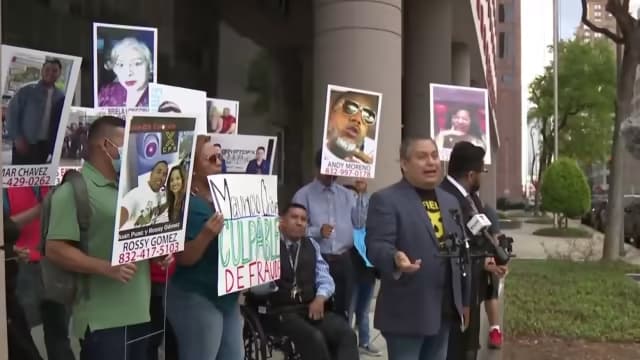
The pitch was irresistible to many unsophisticated investors. Chávez, who would introduce himself by asking, “Who is Latino who would like to become a millionaire?”, claimed to lead a company that solicited money for investment in digital currency in return for potential riches. He boasted that the company had already created more than 20 millionaires and helped thousands pay off all their debts.
CryptoFX lured investors with promises that its crypto asset and foreign exchange trading would generate “risk free” and “guaranteed” profits ranging from 15% to 100%. Specific promotional materials claimed investors could earn a 90% profit in just six months, or even 18% every month.
Chávez solidified this facade of expertise by offering paid cryptocurrency trading courses, with costs ranging between $500 and $1,500, under the purported goal of “educating and empowering” the community to build wealth. However, the U.S. Securities and Exchange Commission (SEC) found that these seminars were merely conduits for soliciting investments. Critically, Chávez, a 41-year-old resident of Houston, had no background, education, or training in investments or crypto assets, having previously worked as a landscaper before venturing into digital assets.
The operation was massive in scale, defrauding as many as 40,000 people. The SEC filed an emergency action in September 2022 to halt the fraudulent and unregistered crypto asset offering, but the damage was already done.
SCAM MECHANISM (CORE FOCUS): Falsified Returns and Affinity Fraud
The core of the CryptoFX fraud was a classic Ponzi scheme, defined by the practice of attracting new investors and using their money to pay “supposed returns” or “utilities” to previous investors, rather than generating profits from trading.
The vast chasm between the money raised and the money actually invested reveals the deliberate nature of the deception. The company successfully raised an alleged total of $300 million, largely through cash transactions. However, the SEC reports that instead of using the funds for trading, the defendants used the money to pay false returns, commissions, and bonuses to themselves and investors.
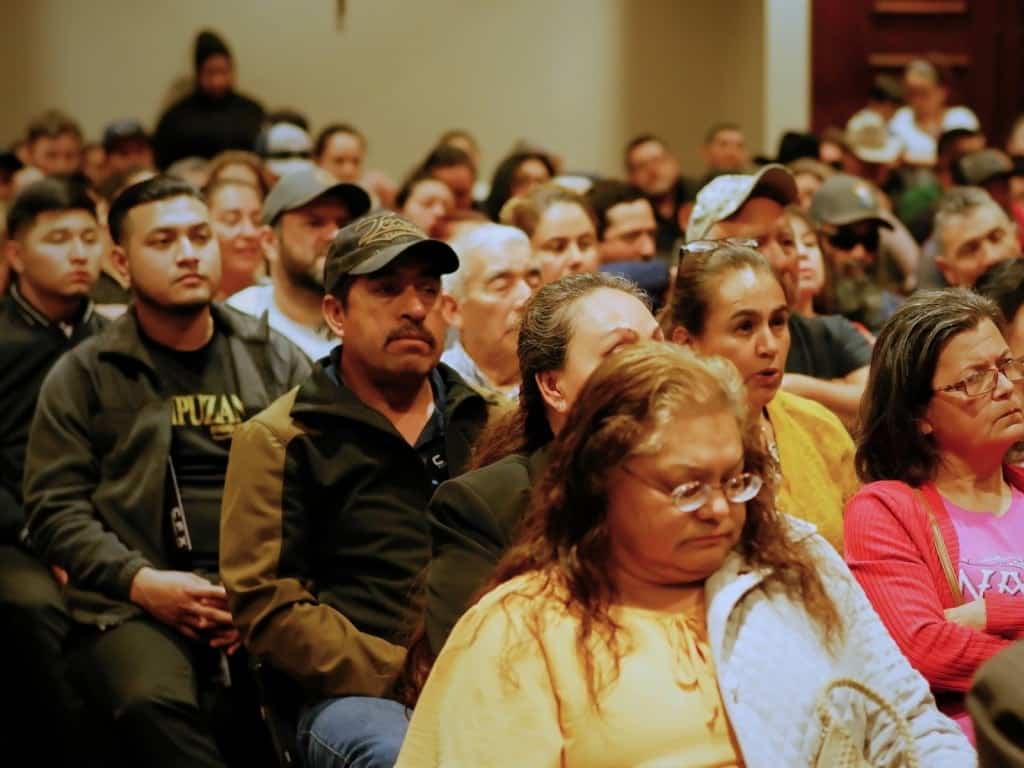
According to the SEC’s findings, Chávez’s actual crypto-asset and foreign-exchange market trading generated only $2.6 million in trading profits, amounting to less than 1% of the total amount raised. Early estimates noted that of $12 million raised, only about $1 million was actually invested in crypto assets. The scheme could only make payments of promised returns—such as the $2.7 million paid out to early investors—by using the funds coming in from new recruits.
The Weaponization of Community Trust: The scheme is a textbook example of affinity fraud. By “targeting the Latino community,” CryptoFX exploited cultural and linguistic trust, enabling them to raise millions from people who might otherwise have applied standard due diligence. This tactic made it easy for them to recruit Chicago-area sales agents who, in turn, solicited investments from friends and relatives within the local Latino community.
The Trail of Luxury and Misappropriation
While investors were promised financial freedom, the founders were busy financing extravagant lifestyles, diverting substantial portions of the intake to their personal use. The government alleges that the defendants, Mauricio Chávez and Giorgio Benvenuto, spent nearly $1.5 million on luxury items and personal spending.
Details of the alleged personal spending include:
- Cars: Approximately $460,000 on vehicles, including a $114,000 2021 Mercedes-Benz GLS.
- Housing: Funds were used to acquire real estate, including a house in the city of Katy valued at $630,000 (according to the SEC) and other properties.
- Credit Cards and Retail: $267,000 in credit card payments and $196,000 on luxury retail purchases.
- High-End Residency: $186,000 was spent at the Post Oak Hotel, a five-star Houston establishment where Chávez had apparently taken up residence.
- Entertainment and Travel: $110,000 on travel, $101,000 on restaurants, $19,000 on jewelry, and $15,000 spent at nightclubs described by the SEC as “adult entertainment establishments”.
- Business Expenses: $30,000 was spent to purchase a hair salon in Houston.
WARNING SIGNS (RED FLAGS): Ignoring the Obvious
The CryptoFX case was riddled with identifiable warning signs that potential investors should heed:
- Unrealistic and Guaranteed Returns: Any investment promising high returns—especially 15% to 100% or 90% in six months—while simultaneously claiming to be “risk-free” or “guaranteed,” is a major red flag. Legitimate crypto trading carries significant volatility and risk.
- Lack of Credentials and Registration: Chávez offered paid trading courses and accumulated $300 million without having any discernible background, education, or training in investments, or proper securities registration or licensing. Investors should confirm regulatory compliance and credentials independently.
- Affinity Pressure: While recommendations from trusted sources may seem safer, the CryptoFX case demonstrates how fraudsters exploit community bonds (affinity fraud) to bypass standard due diligence. Investors must apply critical thinking, even when solicited by friends or family.
- Post-Injunction Solicitation: Even after the SEC issued an emergency order to halt operations in September 2022, CryptoFX affiliate members continued to seek new investments. Two defendants, Gabriel and Dulce Ochoa, continued to solicit, with Gabriel Ochoa instructing investors to retract their complaints to the SEC with the promise of getting their money back. Another defendant, Maria Saravia, allegedly told investors the SEC lawsuit was fake.
CONSEQUENCES & LEGAL STATUS: The Quagmire of Recovery

The legal fallout from CryptoFX is immense and technically complex. The SEC charged a total of 17 individuals in March 2024 for their roles in orchestrating the scheme, including violations of anti-fraud, securities-registration, and broker-registration provisions.
The SEC is seeking permanent injunctive relief, the return of illegally obtained profits (disgorgement), interest, and civil monetary penalties for all defendants.
The Difficult Path to Recovery:
The recovery process, overseen by court-appointed receiver John Lewis Jr., has been described as an “extremely complex” and “massive investigation”. The receiver faces substantial hurdles:
- Missing Records and Cash Transactions: Almost all transactions with CryptoFX were conducted in cash, and the company kept few, if any, consistent records on where the money went. Furthermore, Chávez is accused of refusing to turn over his own records and is not cooperating fully with the receiver’s requests.
- Technical Difficulty in Tracing: The analysis reveals the technical difficulty in tracing the more than $130 million moved in cryptocurrency transactions, especially when “no clear or consistent records” exist.
- Dismal Recovery Rate: While the SEC estimates total recoverable assets should exceed $56 million, tracking has only yielded $9.4 million in funds so far, and the receiver has warned that a complete tracing of investments may not be possible.
- Net Loss Post-Liquidation: As of June 30, 2023, only $4,219,761 of assets had been successfully liquidated (sold or remitted). However, this figure is reduced by administrative expenses and fees. After paying legal fees for the receiver’s firm ($215,924) and Chávez’s former lawyers ($101,368), as well as $6,000 monthly stipends for living expenses to the accused partner Giorgio Benvenuto ($36,000 to date), the net balance of liquidated assets was only $3,661,559.
Among the assets successfully seized or targeted are real estate properties, luxury vehicles (like the $114,000 Mercedes-Benz GLS), and deposits in bank accounts linked to Chávez’s wife, Angélica Vargas, totaling over $430,000. The investigation also focuses on assets held through corporate entities and trusts linked to Chávez’s romantic partner, Janette González.
WRITER’S COMMENTARY: Systemic Vulnerabilities and The Path Forward
Core Cause Assessment: Why the Scam Succeeded
The CryptoFX scheme did not succeed merely because of market hype; it flourished due to a systemic vulnerability rooted in affinity fraud coupled with the high-risk, low-transparency environment of certain crypto asset offerings. The founders successfully transformed a lack of financial literacy and a desire for community-based wealth-building into a lethal vacuum of due diligence. By intentionally targeting a demographic that traditionally faces barriers to mainstream financial services—the Latino community—they exploited inherent trust to bypass the critical questioning that would have flagged the unrealistic promised returns (up to 100%) and the complete absence of regulatory compliance. The founders’ ability to collect millions, primarily in cash, and utilize unregistered promoters across multiple states further demonstrates how complex, decentralized criminal networks thrive when regulatory gaps are present. The absence of sophisticated financial record-keeping, exemplified by the receiver’s struggle to trace the $300 million flow, was a feature of the fraud, not a bug.
Proposals for Prevention
- Regulation of Affinity Promoters (Broker Registration): Regulatory bodies like the SEC must intensify enforcement and possibly codify rules requiring stricter registration and licensing for all individuals promoting or soliciting investments in digital assets, regardless of whether they offer “educational services” or operate solely within niche communities. This should specifically target the registration requirements for brokers and sales leaders, like the 17 individuals charged in this case, to hold them accountable before massive damage occurs.
- Mandatory Regulatory Disclosure Transparency (ML/TL): Implement a multilingual (ML) transparency layer (TL) for all non-registered digital asset investment opportunities that make profit claims above a certain benchmark (e.g., 20% APR). This TL would require prominent, standardized disclaimers in the language of the target community (e.g., Spanish in this case), explicitly detailing the lack of SEC/FINRA registration and the historical loss ratio of the specific platform, making it harder for fraudsters to promise “risk-free” gains.
- Whistleblower Protection Enhancement: The alleged violation of whistleblower protection rules (Rule 21F-17(a)) by defendant Gabriel Ochoa, who instructed investors to retract their SEC complaints, highlights the necessity of robust enforcement. The immediate passage of the bipartisan SEC Whistleblower Reform Act of 2023, which aims to codify Rule 21F-17(a) into law, is essential to ensure individuals can report wrongdoing without fear of retaliation or coercion, thereby enhancing the SEC’s ability to police large-scale schemes effectively.
A Ponzi scheme, like CryptoFX, is functionally similar to a relay race where the runners at the beginning get to wear the medals and spend the prize money, but the runners joining near the end are left with nothing but the baton they paid for, realizing the ‘race track’ was never finished..
REFERENCES
- CryptoFX: informe judicial detalla los vericuetos de un caso extremadamente complejo
- SEC Alleges Whistleblower Protection Violations in $300 Million Crypto Ponzi Scheme Case
- SEC Charges 17 in Alleged Ponzi Scheme Involving CryptoFX
- Chicago Latinos Say They Were Lured Into Investing in a Ponzi Scheme