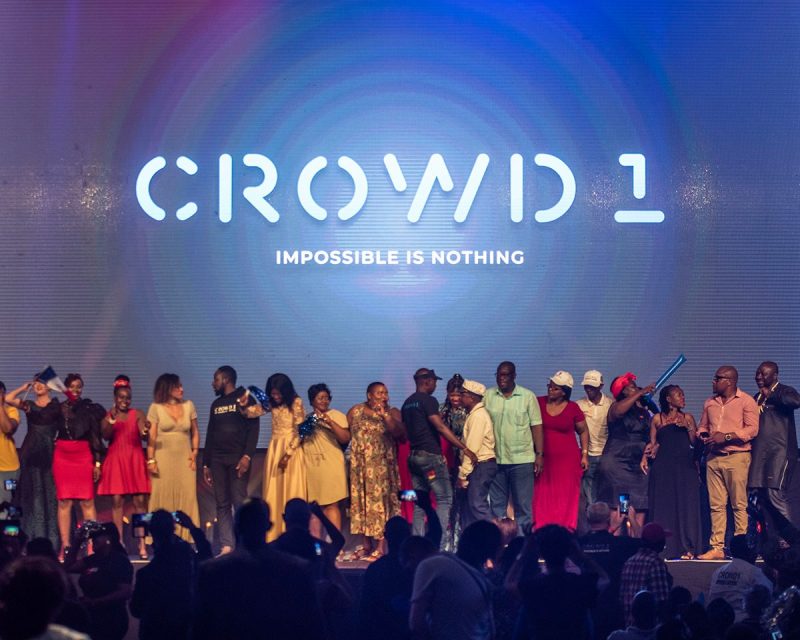
The promise was an unattainable dream: sleek suits, expensive champagne, luxury holidays, and a key to unlock a magical financial kingdom. Marketed as “the fastest-growing crowd marketing company in the world,” Crowd1, founded by Swedish network marketing veteran Jonas Werner in 2019, leveraged the aspirational language of the tech boom—with mentions of cryptocurrency, NFTs, and “Web3″—to disguise an old, predatory mechanism. While the company boasted of becoming a “Unicorn,” a startup valued over $1 billion, regulatory bodies and global investigations have definitively unmasked it as an elaborate, audacious pyramid scheme that has left countless victims across Africa, Asia, and Latin America stranded in debt and financial despair.
CASE SUMMARY: From Unicorn Promise to Global Warning
Crowd1’s operations were spearheaded by the Impact Crowd Technology (ICT) group, with the company initially launched to the masses in 2019. It positioned itself as a digital marketing and networking platform. To start earning, participants were required to buy an “educational package” directly from the company.
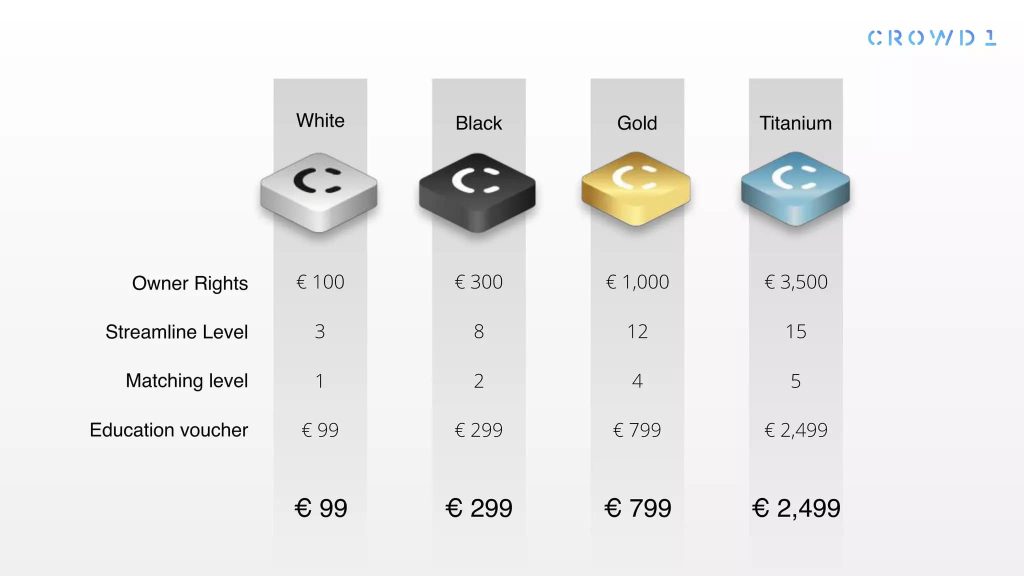
The packages were tiered, ranging from the starter White Level (costing EUR 99.00 or USD 117.53) up to the Titanium Pro Level (the most expensive, at EUR 3.99 K or USD 4.74 K). Members were also presented an opportunity to earn money through acclaimed partnerships with various affiliate companies in the online gaming industry, including gambling, lotteries, and travel access.
For a time, the scheme attracted significant attention, fueled by bold celebrity endorsements, such as that of well-known Swedish entrepreneur and investor Johan Staël von Holstein, who publicly supported the “Unicorn” vision. Crowd1 claimed to have attracted nearly 50 million members worldwide and held large events across Africa.
However, the facade began to crumble in late 2020. Staël von Holstein departed abruptly in December 2020, citing “health reasons” in a press release, though he later revealed he left because he “no longer could stand behind what they were doing,” feeling betrayed and tricked by the founder Jonas Werner. Top sellers also began leaving around Christmas 2020, claiming difficulties in receiving earned commissions.
The inevitable collapse for many members—especially those at the bottom—occurred as the primary source of income (recruitment) proved unsustainable. By late 2022, Crowd1 announced that the packages sold for years were no longer valid for earning commission, requiring members to purchase new “Elements packages” to continue participating.
SCAM MECHANISM: The Recruitment Engine Disguised
Crowd1 is unequivocally characterized as a pyramid scheme (or Ponzi scheme) by various regulatory bodies and media investigations, including the Bank of Namibia (BoN) and the BBC.
The Illusion of Value
The core business activities contravene financial regulations because the primary source of income is generated through the recruitment of new members, not the sale of genuine products.
Crowd1’s model operates as follows:
- Mandatory Education Packages: A person must buy an “education package” to participate. The BBC investigation found that even the most expensive package’s “educational content” was largely valueless, consisting of about an hour of video content for the Titanium package, often plagiarized or using materials readily available for free online.
- The Referral Commission: Members earn money by receiving a commission for every additional member they bring into the platform. The company prefers to call this “sharing the opportunity,” deliberately avoiding the term “recruitment”.
- Owner Rights and Rewards: Participants were promised “owner rights” or “bonuses” and received an internal asset called “Crowd1 rewards”. These rewards, which had an internal exchange rate of 2 euros a piece, were touted as the basis for future profit sharing from the company’s sales.
The Digital Shift and Financial Opacity

As the scheme drew regulatory scrutiny, particularly concerning the nature of the rewards, Crowd1 made aggressive pivots. Realizing the rewards could be mistaken for a regulated financial product, the company “phased them out” in 2021, converting them into shares in an unnamed British company called DPN. Crowd1 founder Jonas Werner confirmed there is “no direct link” between Crowd1 and DPN besides the swap, and stated the shares’ value depended solely on DPN’s success.
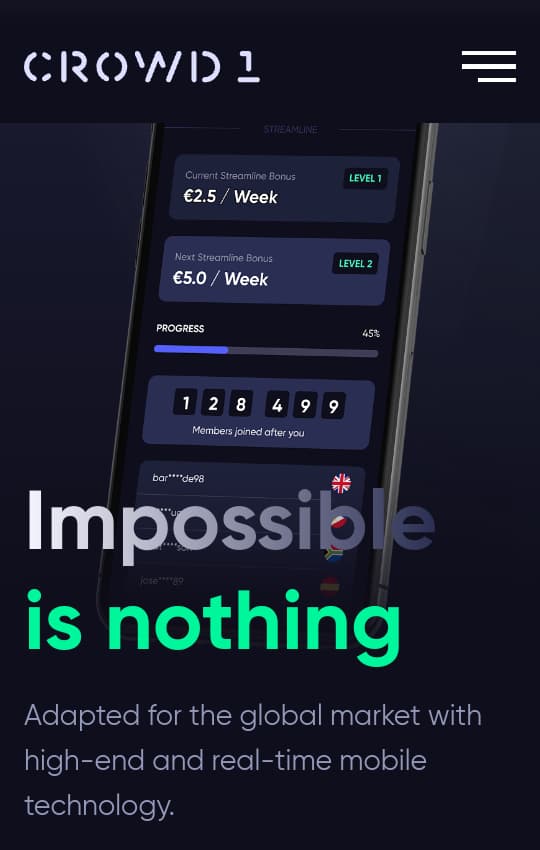
More recently, Crowd1 has pivoted entirely to “Web3,” selling new packages containing digital assets such as Non-Fungible Tokens (NFTs). The company is also planning to launch its own cryptocurrency, banking on its massive existing membership base to adopt and buy the token, with Werner stating they “will probably be top five, after bitcoin and ethereum”.
Financially, the company operates under intense secrecy. Crowd1 has been formally based in Ras Al Khaimah, United Arab Emirates (UAE), where transparency of private companies is close to zero. Money from package sales was reportedly transferred via a bank in Malta to the UAE. One source claimed the company keeps “most of its money” in the cryptocurrency Bitcoin.
WARNING SIGNS (RED FLAGS)

For the public, several critical red flags should have immediately raised alarms about Crowd1’s legitimacy:
- Lack of Authorization and Legal Status: Crowd1 was never an authorized Financial Service Provider (FSP) or FSP representative in South Africa. Investing with unauthorized FSPs is inherently “extremely high-risk” and often fraudulent, leading to losses with little to no recourse. The BoN banned Crowd1 in February 2020 because its business model contravened the Banking Institutions Act due to its pyramid structure.
- Product-to-Recruitment Disparity: If a company’s sales pitch focuses overwhelmingly on recruiting new members rather than the quality or utility of its product, it is a pyramid scheme. Crowd1’s sales team rarely spoke about the educational product, instead focusing on “how to sign up new members”.
- High-Pressure, Flamboyant Marketing: Crowd1 sold the “illusion of riches,” sharing videos of members driving luxury cars and enjoying glamorous holidays. This psychological tactic specifically targeted populations desperate to escape poverty. Members were encouraged to sign up everyone they knew—family, Facebook friends, and church friends—often leveraging personal trust for financial gain.
- Suspicious Leadership Ties: Founder Jonas Werner was seen holding luxury incentive trips with former top sellers of Onecoin—Kenny Nordlund and Udo Deppisch—one of the largest fake cryptocurrency pyramid schemes in history. This association suggests a history of involvement in fraudulent models.
- Fake Physical Presence and Impersonation: In recent resurgences, attempts to locate the company’s claimed physical offices in Nigeria revealed non-existent addresses or residential properties previously investigated by law enforcement. Furthermore, its latest strategy involves creating over 20 fake Facebook pages that impersonate trusted media organizations like Channels Television and BBC News Nigeria to lure new victims. These fake pages often promise impossible returns, such as doubling investments within one or two hours.
CONSEQUENCES & LEGAL STATUS
The fallout from Crowd1 has been global, resulting in severe financial losses and widespread regulatory action.
Devastating Human Cost
The scheme deliberately targeted the vulnerable in African countries like South Africa, Nigeria, and Kenya. Victims include a woman in South Africa named Rosinah, who invested her entire life savings into eight Crowd1 packages, believing she was buying “shares” that would pay a regular salary. She was recruited by her pastor and subsequently signed up her adult children, only to receive nothing in return. Rosinah lamented that she wasted all her money and is now “living in a shack, with no money,” expressing deep shame. Testimonials collected in Nigeria show victims losing amounts up to N1.8 million (Nigerian Naira) and N10 million. Many victims reported being defrauded by individuals, including those claiming to be pastors.
Global Regulatory Hammer
Governments and financial watchdogs worldwide have issued warnings or outright bans against Crowd1:
- South Africa (June 2020): The Financial Sector Conduct Authority (FSCA) warned the public that Crowd1 was unauthorized to render financial services.
- Namibia (February 2020): The Bank of Namibia banned Crowd1 for operating an unsustainable pyramid scheme that contravened the Banking Institutions Act.
- Philippines (May 2020): The Securities and Exchange Commission (SEC) issued a cease and desist order (CDO) to CROWD1 Asia Pacific Inc. for engaging in “fraudulent” investment-taking activities without proper registration or permits.
- Sweden (November 2022): Swedish police (The Swedish Economic Crime Authority) raided Crowd1’s Stockholm office and the homes of key individuals, seizing documents and computers as part of an investigation into commercial money laundering. Three Swedish citizens are suspected, and the prosecutor noted the suspicion is based on the funds coming from a “classic pyramid scheme”.
- Multinational Action: Countries including Mauritius, Paraguay, New Zealand, Vietnam, Burundi, Gabon, and Ivory Coast have either banned the operation or issued formal warnings.
Despite these global shutdowns and the unmasking by outlets like BBC Africa Eye, Crowd1 has proven relentless, quickly moving into new jurisdictions and utilizing deceptive digital tactics to continue attracting victims, particularly in Nigeria and India. The Nigerian financial crime commission has repeatedly warned the public to be wary of fraudulent schemes, noting that the temptation of quick gain often ends in misery.
WRITER’S COMMENTARY: The Digital Deception Cycle
Crowd1 is less a cryptocurrency scam and more a timeless pyramid scheme expertly cloaked in modern digital terminology, making it a crucial warning for the crypto-interested public who often face similar high-risk, unregulated environments.
Core Cause Assessment: Why the Scam Succeeded
The success of Crowd1 stemmed from two primary factors: Geographic Exploitation of Desperation and The Authority Mask. Firstly, the scheme thrived by targeting vulnerable populations, particularly in Africa, who were desperate for income, exacerbated by events like the. Covid-19 lockdown. The scammers provided an easy-to-access, immediate solution via smartphones. Secondly, Crowd1 masterfully used “The Authority Mask”—parading highly credible, respected figures like Swedish entrepreneur Johan Staël von Holstein and exploiting the trust placed in local figures (pastors and church friends). More recently, the use of fake Facebook pages impersonating major news media outlets illustrates a deliberate and calculated effort to manufacture institutional legitimacy and trick the public into believing the opportunity is sanctioned or verified. By rapidly adopting Web3 jargon (NFTs, tokens) and boasting connections to previous, large-scale crypto frauds (Onecoin founders), Crowd1 kept pace with investor interest in high-risk, high-reward digital assets, sustaining the illusion of future value even as the core mechanism remained pure recruitment.
Proposals for Prevention
To combat the rapid digital spread and resurgence of sophisticated pyramid schemes like Crowd1, action must be taken on three fronts:
- Mandatory Global Regulatory Harmonization and Swift Enforcement: Pyramid schemes operating across borders (like Crowd1, which routes funds through Malta and the UAE while targeting Africa) require coordinated regulatory enforcement that transcends national jurisdictions. A global task force focused solely on cross-border digital financial fraud, with the power to freeze assets and issue unified, immediate warnings, is necessary to preemptively halt their spread.
- Digital Asset Disclosure Mandates: Any Multi-Level Marketing (MLM) structure or entity that sells assets disguised as “education,” “rewards,” or proprietary crypto tokens must be legally mandated to disclose the detailed, audited financial value of the underlying asset (or lack thereof) prior to sale. This eliminates the “valueless education package” loophole.
- Social Media Platform Liability: Major social media platforms (like Facebook) must be held strictly accountable for immediately identifying and permanently shutting down pages that impersonate legitimate news organizations or government entities for the purpose of promoting fraudulent financial schemes, thereby removing the manufactured veneer of trust used to ensnare victims.
Crowd1’s ongoing deception cycle acts like a digital game of musical chairs: the luxurious music of extravagant promises plays loudly, enticing millions to join. But when the music stops—as it inevitably does when recruitment stalls—only those sitting at the very top of the hierarchy have secured their wealth, leaving the vast majority of latecomers standing exposed, broke, and permanently outside the promised kingdom.
REFERENCES
- namibiafactcheck – SCAM ALERT! Watch out for Crowd1
- inquirer – SEC orders CROWD1 to stop illegal investment scheme
- weetracker – From Europe With Loss: Crowd1’s Shady Scheme Has Stung Many Africans
- dubawa – SPOTLIGHT: Crowd1 is still around. Here are new ways the platform defraud people
- breakit – Efter Crowd1-härvan – tre personer döms till fängelse
- vietnamnet – Ngồi im một chỗ, trở thành tỷ phú: ‘Miếng pho-mát trên bẫy chuột’ của Crowd1?