
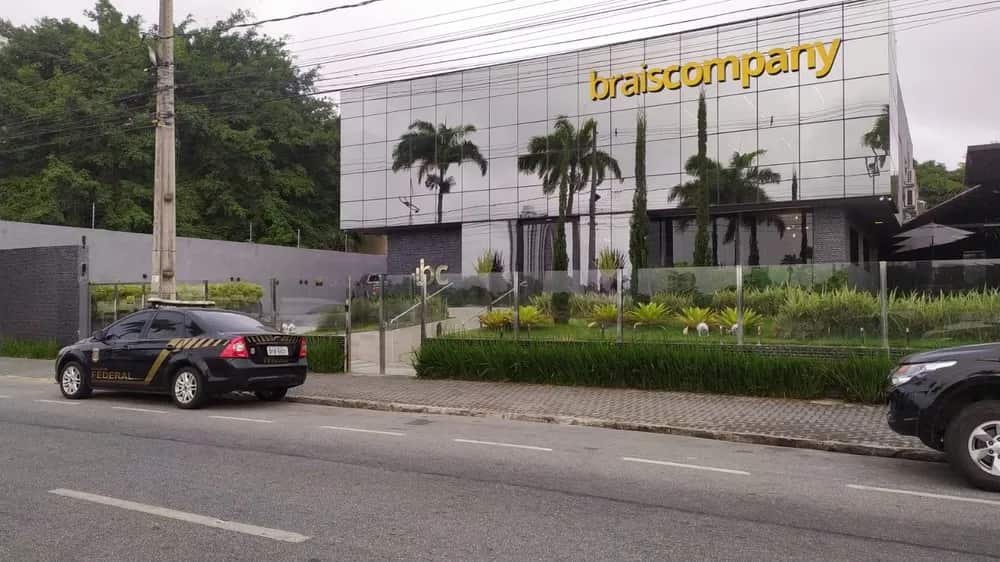
The spectacular rise and devastating fall of Braiscompany stands as one of Brazil’s most consequential crypto fraud cases to date, illustrating the profound risks associated with unregulated digital asset investments and the seductive power of guaranteed high returns. Headquartered in Campina Grande, Paraíba, the defunct cryptocurrency brokerage managed to attract thousands of investors, often from its local community, by presenting an irresistible but ultimately illusory path to wealth. The resulting collapse, which saw executives fleeing the country and ultimately facing centuries in prison, serves as a stark warning to the crypto-interested public globally.
CASE SUMMARY
Braiscompany, founded by Antônio Inácio da Silva Neto—known primarily as Antônio Neto Ais—and his wife, Fabrícia Campos (Fabricia Ais), positioned itself as a sophisticated enterprise operating in the cryptoasset market. The company, headquartered in Campina Grande, Paraíba, attracted clients by making extravagant financial promises.
The core offer revolved around the concept of “renting” cryptocurrencies. Clients were instructed to convert fiat currency into virtual assets, such as Bitcoin, and then send these assets to a company wallet. In return for “locating” their digital assets for a period of one year, Braiscompany promised investors monthly interest of up to 8% on their deposits. This exceptionally high fixed rate of return was deemed “irreal” by the standards of conventional financial markets.
Through this structure, Braiscompany managed to move more than R$1 billion. Prosecutors later estimated that the scheme raised R$1.11 billion (approximately $190 million) from roughly 20,000 investors. Earlier estimates pegged the loss at around $160 million in customer funds allegedly stolen by the owners before they fled.
The operation created deep economic saturation in its local base. Campina Grande, a city of 400,000 inhabitants, became the epicenter of the alleged scam, affecting not just wealthy individuals but also low-resource families, public servants, merchants, and retirees. One investor who had transferred R$230,000—representing all his accumulated savings—described the impact as equivalent to experiencing a death in the family.
The facade of success began to crumble in December 2022, when investors first reported being unable to withdraw their funds from the platform. Earlier in 2023, the company officially closed amid mounting allegations of fraudulent activity. The ensuing investigation by police, codenamed Operation Halving, confirmed suspicions that the company was a possible crypto pyramid scheme. Following the platform’s collapse, executives were suspected of fleeing the country with customer funds, confirming the magnitude of the financial disaster.
SCAM MECHANISM
Braiscompany’s success relied on masking a classic Ponzi and pyramid scheme structure with the modern veneer of cryptocurrency technology, utilizing a core mechanism built on illegal operational practices and an unsustainable guarantee of returns.
The economic and legal basis of the fraud was rooted in three key violations: the promise of fixed, outrageous returns; operating an unlicensed financial system; and engaging in securities fraud and money laundering.
- The Ponzi Foundation and Illegal Operation: The promise of up to 8% monthly interest on deposits, whether fiat or Bitcoin, exceeded any reasonable or sustainable return achievable through legitimate crypto trading. Prosecutors and courts determined that Braiscompany operated a pyramid structure by promising these “outsized returns”. The enterprise functioned as an unlicensed financial institution, leveraging an “informal financial network” to manage and move client funds.
- The Illegality of the “Rental” Model: A key element of the company’s pitch—the “aluguel” or rental of client crypto assets—was fundamentally prohibited under Brazilian civil law. According to legal experts cited in the sources, Brazil’s Civil Code (Article 565) prohibits the rental of “fungible goods,” which include cryptoassets like Bitcoin because one bitcoin can be replaced by another of the same species, quality, and quantity. Therefore, the very premise of the Braiscompany business model was, by definition, illegal.
- Technical and Economic Execution of Fraud: In addition to running an unlicensed operation, the scheme’s mechanics included severe financial malfeasance. The court found that money was laundered through the use of shell companies and unregulated crypto wallets. Individuals within the organization, such as Joel Ferreira de Souza, who was found to be the main operator in subsequent court actions, were found guilty of operating the unlicensed financial institution and managing these fund movements within the clandestine network. This reliance on irregular financial practices, including high-fee transactions and informal money transfers, helped mask the fact that customer returns were likely being paid using funds from new investors, a hallmark of a Ponzi scheme.
When the ability to pay out returns finally seized up, Neto Ais attempted to deflect blame, claiming that the company’s inability to continue paying dividends was due to “constant blockages” imposed by the world’s largest crypto exchange, Binance, which he characterized as a “systemic, global lock”. Binance officially refuted this, asserting that it only takes actions on accounts based on contracts, terms, and policies accepted by all users.
WARNING SIGNS (RED FLAGS)
For the crypto-interested public seeking to navigate the complex digital asset landscape, the Braiscompany fraud offered several textbook indicators of highly dangerous or illicit operations. Investors should treat these signs as severe cautions before committing funds:

- Unrealistic Guaranteed Returns: The most critical red flag was the promise of a guaranteed monthly interest rate of up to 8%. Cryptocurrency markets are inherently volatile, making fixed, high-percentage returns (especially 96% annually) nearly impossible to deliver consistently through legitimate trading. Any investment promising specific high returns regardless of market conditions should be viewed with extreme skepticism.
- Illegal or Questionable Business Models: Braiscompany’s model of “renting” fungible crypto assets was explicitly forbidden by existing Brazilian law, classifying the fundamental business operation as illegal. Investors should scrutinize the legal framework underpinning an investment model, particularly concerning how assets are managed and exchanged.
- Cultivation of Extravagant Personal Brands: Founder Antônio Neto Ais deliberately used social media, particularly his Instagram account (which had 900,000 followers), to project an image of hyper-success. This included meticulously curated photos next to private jets (one of which was later sold), luxury cars, and celebrities, alongside magnetic “coach”-style messaging. When a company’s primary marketing focus is the founder’s opulent lifestyle rather than verifiable financial documentation or regulatory compliance, it is a significant warning sign.
- Psychological Manipulation and FOMO: The company employed a psychological strategy that leveraged social proof and a “fear of missing out” (FOMO). By persuading people that they would be “a fool excluded” if they did not join, the scheme induced widespread community participation, ensuring a constant influx of fresh capital needed to sustain the Ponzi structure.
- Lack of Regulatory Oversight and Compliance: While Neto Ais claimed the company had been investigated for four years and that investigations were “a natural process,” the scheme was ultimately characterized as operating an unlicensed financial institution. The eventual determination of Federal Court jurisdiction rested partly on the evidence of illegal operations involving valores mobiliários (securities). The general public should look for clear evidence of licensing by relevant securities and financial regulators (like Brazil’s CVM).
- Suspension of Withdrawals and Executive Flight: The inability of investors to withdraw funds starting in December 2022 served as the final, absolute confirmation of the scam’s collapse. This technical failure was followed swiftly by the founders fleeing the country in February 2023 when police attempted to serve preventive arrest warrants during Operation Halving.
CONSEQUENCES & LEGAL STATUS

The legal fallout from the Braiscompany collapse has resulted in lengthy sentences and ongoing efforts to recover assets for the estimated 20,000 victims.
- Parties Involved and Legal Status: The investigation, codenamed Operation Halving, led to multiple arrests.
- Antônio Neto Ais and Fabrícia Campos: The founding couple initially fled Brazil and were added to Interpol’s red list as international fugitives. They fled by car to Argentina. They were arrested in Argentina in March 2024 while living in a closed condominium and were subsequently placed under house arrest, awaiting extradition to Brazil. The couple attempted to use their minor daughters—including a child born while they were fugitives in Argentina—to argue for freedom, but the request for Habeas Corpus was denied by the Superior Tribunal of Justice (STJ). Neto and Fabrícia had previously been convicted in absentia in February 2024, receiving sentences of 88 years and 7 months, and 61 years and 11 months, respectively, along with eight other people.
- Other Individuals Sentenced: In a separate or later phase of sentencing in April 2025, three other individuals linked to the scheme received massive combined sentences totaling 171 years in prison. Federal Judge Vinícius Costa Vidor handed down the convictions based on crimes including fraudulent management, operation of an irregular financial institution, organization criminosa, and money laundering.
- Legal Sentences (April 2025 Convictions):
- Joel Ferreira de Souza: Designated as the alleged mastermind and main operator in this action, he was sentenced to 128 years, 5 months, and 28 days of imprisonment.
- Gesana Rayane da Silva: Identified as having a relevant role and managing client funds, she received a sentence of 27 years, 10 months, and 10 days.
- Victor Augusto Veronez de Souza: Sentenced to 15 years of imprisonment for his role as an intermediary. Two other defendants, Mizael Moreira Silva and Clélio Fernando Cabral do Ó, were acquitted due to insufficient evidence.
- Asset Seizure and Victim Reparation: Brazilian authorities, including law enforcement and the CVM, have been key in the investigation. During raids on company-linked addresses in São Paulo and Aracaju, officials seized approximately $28.7 million worth of assets. The court later fixed a minimum value of R$36.5 million for the reparation of damages caused to investors, a sum to be paid jointly by those involved. A lawyer representing victims, Artêmio Picanço, warned that those affected must file civil claims promptly, or the seized funds might be absorbed by the state rather than returned to victims. The use of forensic software and the breaking of banking, fiscal, and telematics secrecy were crucial in producing the evidence leading to the convictions.
- Broader Connections: The case also involved an unexpected connection to the attorney Nelson Wilians, who had represented Braiscompany founder Antônio Neto in the Operation Halving phase, demonstrating how specialized legal services are sometimes utilized by leaders of major crypto pyramid schemes, including Unick Forex and Grupo Bitcoin Banco.
WRITER’S COMMENTARY: CORE CAUSE ASSESSMENT
The Braiscompany fraud succeeded not merely because of its technical execution, but because it perfectly leveraged a potent combination of hyper-local trust and the psychological exploitation of aspirational finance.
In a tightly knit community like Campina Grande, the scheme bypassed traditional investment skepticism by relying on word-of-mouth endorsement among neighbors, friends, and family. This communal trust mechanism meant that when an investor saw their local merchant or public servant successfully receiving the promised 8% return, the scheme gained immediate, pseudo-validated legitimacy, making it difficult to recognize the classic “Ponzi” flow.
Crucially, founder Antônio Neto Ais did not sell a product; he sold an identity. He cultivated an image defined by rags-to-riches success, luxury, and even religious affirmations (“Deus é meu sócio” – God is my partner). This magnetic, “coach” persona provided a comforting, human face to the volatile, complex world of crypto investment. This “cult of personality” worked in tandem with the “Fear of Missing Out” (FOMO), where hesitation felt like choosing poverty or exclusion, effectively silencing the critical thinking required to question the unrealistic 8% guarantee. The blend of local trust, charismatic authority, and the seductive simplicity of fixed, massive returns created a perfect environment for mass deception, illustrating that even in the age of decentralized assets, the oldest scams rely on exploiting human psychology and misplaced faith.
REFERENCES
financemagnates – https://www.financemagnates.com/cryptocurrency/brazil-jails-braiscompany-trio-for-171-years-over-r11-billion-ponzi-crypto-scheme/
cryptorank – https://cryptorank.io/news/feed/0b2d0-206728-braiscompany-scammers-arrested-brazilian-police
globo – https://g1.globo.com/pb/paraiba/noticia/2025/04/15/caso-braiscompany-justica-condena-tres-pessoas-por-envolvimento-em-esquema.ghtml
livecoins – https://livecoins.com.br/advogado-alvo-da-pf-em-operacao-do-inss-defendeu-braiscompany-unick-forex-e-tomou-calote-do-bitcoin-banco/
portaldobitcoin – https://portaldobitcoin.uol.com.br/casal-da-braiscompany-teve-nova-filha-na-argentina-e-usa-criancas-para-pedir-liberdade/
bbc – https://www.bbc.com/portuguese/articles/cgrn0rw8305o
coindesk – https://www.coindesk.com/policy/2025/04/18/leaders-of-usd190m-brazilian-crypto-ponzi-scheme-sentenced-to-over-170-years-in-prison