The global cryptocurrency market is often lauded for its innovative potential and decentralized freedom. Yet, this very freedom provides fertile ground for sophisticated financial deception. Among the most infamous crypto frauds of recent years, the Finiko scheme stands out, largely due to its staggering scale, earning it the distinction of being the biggest crypto scam in “post-Soviet history”. Targeting Russian speakers across Eastern Europe, Finiko promised unprecedented wealth, ultimately defrauding investors out of potentially billions of dollars before collapsing suddenly in 2021. This in-depth analysis synthesizes the history, mechanism, and fallout of Finiko, serving as a comprehensive cautionary overview for the general crypto-interested public.
CASE SUMMARY
Finiko was founded in the city of Kazan, Russia, in 2019. The enterprise quickly positioned itself as a legitimate Bitcoin (BTC) investment firm. The company’s primary marketing hook revolved around its promise of guaranteed, extremely high returns, frequently touted as up to 30% monthly (or up to 25% guaranteed monthly) from investments in cryptocurrency and stock markets. Finiko claimed to operate using an “automated profit-generating system” that ensured such lucrative yields. Investors were required to stake a minimum of $1,000 or above.
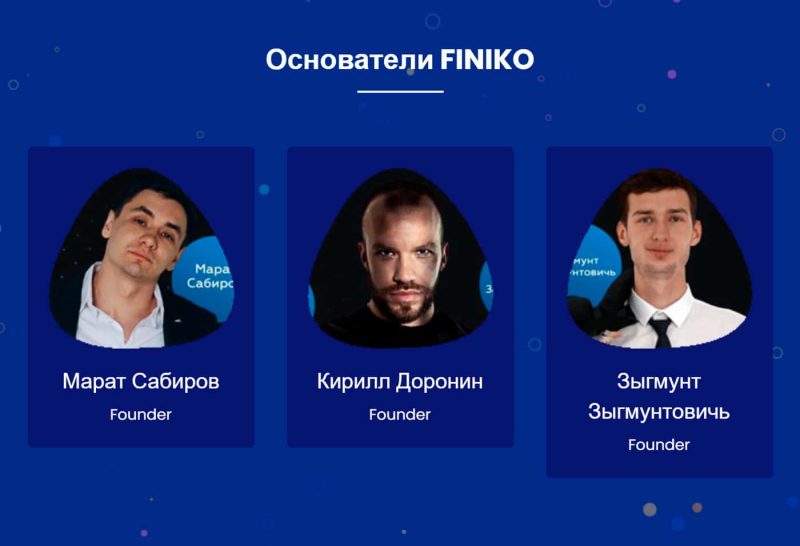
The scheme’s credibility was boosted by its public face, co-founder Kirill Doronin, an Instagram influencer who had been previously associated with other schemes. Beyond standard investment offerings, Finiko also offered elaborate auxiliary services, claiming to help investors purchase major assets like apartments and cars at steep discounts.
The project gathered funds from its customers primarily using Bitcoin and Tether (USDT). In December 2020, Finiko released FNK, its native digital currency. Investors would submit their BTC and receive FNK tokens in exchange.
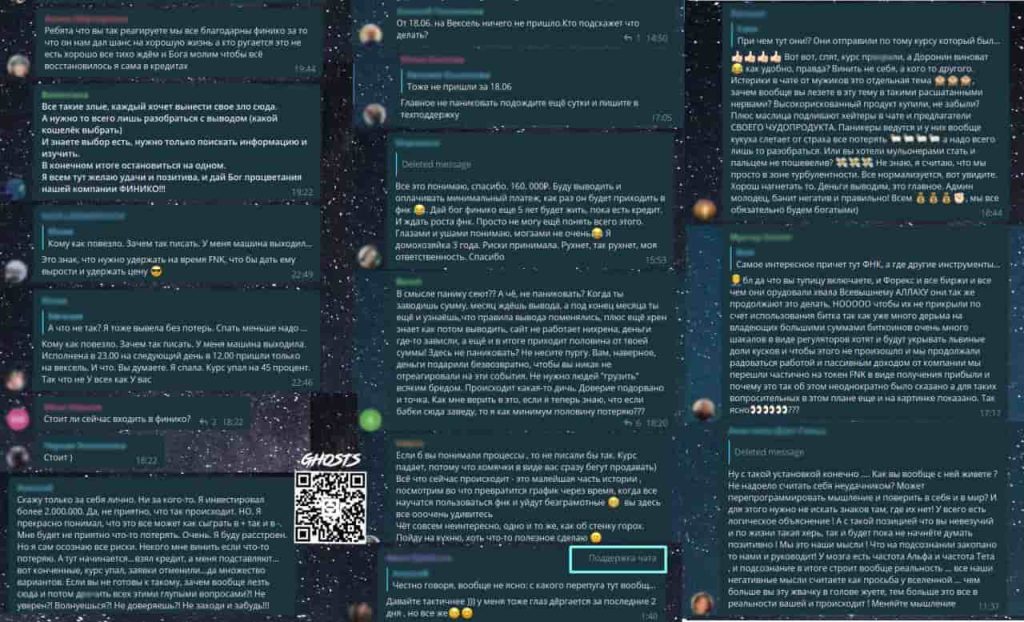
The façade began to crumble in mid-2021. Customers reported issues with late payments during the first half of the year. The crisis accelerated in June 2021 when Finiko formally decoupled all platform operations from the price of Bitcoin and restricted customer withdrawals solely to the FNK token.
In a dramatic sign of impending collapse, the FNK token—which had traded as high as $231—plunged by 97% in just three weeks. By July 2021, all payments and withdrawals were halted entirely, and Finiko offices across the country closed “almost overnight”. Investors attempting to secure their funds were met with demands for extensive documentation, including income reports, a year’s worth of banking transactions, and even “recommendation letters” from their banks, effectively rendering withdrawals impossible.
SCAM MECHANISM

Finiko functioned as a classic Ponzi scheme, cleverly integrated with cryptocurrency mechanics to facilitate rapid growth and global fund movement. Prosecutors confirmed that the core operation involved funneling the money and crypto received from newer clients to pay fictional “profits” to older investors.
- PONZI ENGINE AND REFERRAL GROWTH Finiko’s massive expansion was predicated on a powerful word-of-mouth marketing strategy and a multi-level marketing (MLM) structure. The firm awarded huge referral fees to clients who successfully recruited new investors. This incentivized investors to bring in close friends and relatives, turning trusted social networks into distribution channels for the scam. For many new participants, this predatory system represented their first-ever interaction with digital currencies, making them particularly vulnerable to the scheme’s convincing promises.
- TECHNICAL FACADE AND LONGEVITY The guaranteed returns offered by Finiko, typically around 1% per day for early investors, are highly typical of financial pyramids. However, the scheme managed to sustain operations for an unusually long time—roughly 19 months. Experts attribute this longevity to several critical factors:
- The management stored investment funds in Bitcoin (BTC), and as the value of BTC generally rose during the period, this price appreciation helped the Ponzi scheme’s financial “math largely add up” temporarily.
- Management continuously introduced new “features” to maintain enthusiasm and attract a steady stream of new adherents.
- Investors were actively persuaded to reinvest all their accrued profits back into the pyramid instead of making withdrawals, thus minimizing the immediate need for external liquidity. The combination of these factors, along with the founders’ personal charisma, prevented the scheme from collapsing sooner, even after Russian authorities opened a criminal case.
- THE EXIT STRATEGY AND TOKEN COLLAPSE The eventual collapse was executed through a mechanism intended to obscure the theft and blame the victims. By restricting payouts to the rapidly devaluing FNK token, Finiko ensured that even if investors attempted to withdraw, they received assets worth a fraction of their initial investment. Finiko attempted to deflect responsibility, suggesting that the token’s collapse was due to the “human greed and foolishness” of users withdrawing money too quickly, causing “colossal losses for other partners”.
- CRYPTOCURRENCY MONEY TRAIL Finiko received over $1.5 billion worth of Bitcoin in more than 800,000 separate deposits during its operational period. Blockchain analysis revealed that Finiko’s wallets were tied to substantial holdings of other assets, including 111 million USDT, 1.8 million USDC, and 888 ETH (worth about $2.8 million). The majority of the $1.5 billion in cryptocurrency Finiko handled was ultimately transferred to various entities, including mainstream exchanges, high-risk exchanges, and hosted wallet services.
Crucially, Finiko used sophisticated methods to obscure the flow of stolen funds. Blockchain tracing identified $34 million sent to DeFi protocols for cross-chain transactions and conversion into ERC-20 tokens. Furthermore, roughly $3.9 million was sent to popular mixing services. Between March and July 2020, Finiko transferred more than $9 million worth of Bitcoin to an address linked to Suex, an OTC broker that was later sanctioned by OFAC for its role in laundering funds derived from criminal schemes.
CONSEQUENCES & LEGAL STATUS
The total damage resulting from Finiko remains staggering, with estimates varying based on reporting source and calculation method. The Central Bank of Russia estimates that Finiko duped citizens out of approximately $1.1 billion. Sergey Mendeleev, founder of Garantex exchange, estimated the fraudsters’ losses at around $1 billion. Law enforcement’s initial criminal case focused on a smaller figure (just over $1 million), although preliminary calculations in Tatarstan alone indicated real damage exceeded $95 million. Many of these funds are still yet to be recovered. The total number of victims is estimated to be no fewer than 84,000 people, though initial reports claimed nearly 10,000 investors.
The primary founders of the scheme included Kirill Doronin, Marat Sabirov, Edvard Sabirov, and Zygmunt Zygmuntovich.
- Kirill Doronin, the operation’s public face, was arrested in mid-2021 on fraud charges. Prior to his arrest, he had attempted to evade capture by obtaining Turkish citizenship under the name Onur Namik.
- His co-conspirators, Marat Sabirov, Edvard Sabirov, and Zygmunt Zygmuntovich, were placed on the Russian police wanted list. Edvard Sabirov was subsequently arrested in the UAE in late 2022 following an extended international manhunt. Edvard Sabirov’s past business activities, including a joint venture with Nikolay Nikiforov, a former Russian minister for communications, were brought into focus by the scam.
In May 2024, Liliya Nurieva, the former head of networks at Finiko, became the first executive to face conviction and sentencing. Nurieva was found guilty of fraud and organized crime-related offenses. She was handed a four-and-a-half-year term, which was adjusted to three years by factoring in time already spent in pre-trial custody. Nurieva’s lawyer stated that she intended to appeal the sentence and claimed she had no knowledge the firm was fraudulent upon joining, having even invested her own capital.
The human cost was significant. Investors, many using the promised returns to pay off mortgages or buy property, found their savings instantly vaporized when payments stopped.
WARNING SIGNS (RED FLAGS)
The collapse of Finiko provides numerous lessons for the crypto-interested public regarding common scam typologies. Several clear red flags should have served as warnings:
- Unrealistic and Guaranteed Returns: Finiko’s guarantee of up to 30% returns per month (or 1% daily) on investment is a hallmark of Ponzi schemes, as such yields are unsustainable in legitimate financial markets.
- Lack of Regulatory Compliance: Finiko operated without essential licenses, lacking registration as a forex dealer or with state registries and tax authorities in Russia. Furthermore, the Bank of Russia explicitly placed Finiko on its blacklist, identifying it as having the distinct signs of a financial pyramid.
- Vague or Suspended Corporate Registration: The company used conflicting and questionable legal entities for registration. While the FINIKO trademark was owned by Kirill Doronin, the listed entity CyfronCapital OÜ (Estonia) had its license suspended, and the cited Cyfron FNK LTD (Saint Lucia) could not be located in that country’s registry.
- Disclaimers of Liability: The user agreement explicitly noted that the service did not guarantee the accuracy of information or the safety of the service, and explicitly stated the company was neither a broker nor a provider of investment services.
- Heavy Reliance on MLM/Referral Fees: A compensation structure heavily dependent on recruiting new clients—paid via generous referral fees—is the operational basis of a pyramid scheme, not a legitimate investment fund.
- Withdrawal Restrictions and Token Control: The mid-collapse tactic of first restricting payouts to only the proprietary FNK token (whose price the founders could manipulate) and then imposing impossible withdrawal requirements (demanding extensive financial documents) are tactical maneuvers designed to halt payouts and execute the final exit scam.
WRITER’S COMMENTARY
CORE CAUSE ASSESSMENT
The Finiko scam succeeded primarily by leveraging social capital and economic vulnerability and obscuring the classic Ponzi fraud beneath the novel complexity of cryptocurrency.
First, Finiko arrived during a period of difficult economic conditions in Russia, exacerbated by the Covid pandemic, creating a pool of desperate users seeking quick, substantial earnings. The outlandish promise of 30% monthly returns became irresistible in this climate.
Second, the system masterfully co-opted social trust. By offering massive referral fees, Finiko compelled trusted individuals—friends, relatives, and respected community members—to act as recruiters. This leveraged personal relationships to bypass initial skepticism, particularly amongst the significant portion of clients who were new to the world of digital currencies.
Third, the presence of Kirill Doronin, a charismatic social media influencer, provided a necessary veneer of authenticity and personal connection, effectively distracting from the complete absence of regulatory compliance or financial transparency.
Finally, the technical mechanics of the scheme provided a crucial buffer. By holding funds in Bitcoin during a bull market, the firm could temporarily manage the massive liabilities, delaying the inevitable collapse. When the scheme finally imploded, the use of a proprietary, manipulated token (FNK) served as an opaque financial escape mechanism, ensuring that the operators, not the victims, controlled the value of the final payout. Finiko is a chilling reminder that high-tech wrappers, influencers, and tokens do not negate the fundamental principle of financial fraud: if the returns sound too good to be true, they are likely being funded by the next investor’s principal.
REFERENCES
coindesk – https://www.coindesk.com/markets/2021/08/13/founder-of-alleged-95m-ponzi-nabbed-in-russia-3-more-sought
coingeek – https://coingeek.com/100m-btc-ponzi-scheme-finiko-founder-arrested-in-russia/
cryptorank – https://cryptorank.io/news/feed/1207c-russian-court-jails-finiko-crypto-scam-exec-for-three-years.htm
forklog – https://forklog.com/en/founders-of-the-finiko-pyramid-suspected-of-exit-scam/