The crash of FTX in November 2022 was not just a catastrophic market event; it was the definitive exposure of an elaborate, long-running fraud, perpetrated at the very core of the cryptocurrency world’s second-largest exchange. What began as a crisis of liquidity for the exchange, founded by the highly visible and politically influential Sam Bankman-Fried (SBF), quickly dissolved into a criminal investigation revealing “old fashioned embezzlement” and a shocking lack of financial controls. For the general crypto-interested public, the story of FTX serves as the ultimate cautionary tale, revealing how rapidly accumulated leverage, opaque governance, and centralized trust can implode, taking billions in customer funds with it.
CASE SUMMARY: The Altruist’s Ascent and the Sudden Implosion
Sam Bankman-Fried, born in 1992 to Stanford law professors, established himself in the financial world by leveraging his mathematical aptitude and affiliation with the philosophical movement of “effective altruism,” which rationalizes the accumulation of enormous wealth for philanthropic ends. After trading equities at Jane Street Capital, SBF cofounded Alameda Research LLC in 2017, a quantitative trading firm that quickly achieved significant profits using arbitrage strategies on highly volatile digital assets.
In 2019, SBF launched FTX Trading Ltd., a cryptocurrency derivatives platform, which grew rapidly, attracting top venture capital investors. By January 2022, FTX was valued at $32 billion. The company employed aggressive marketing, including Super Bowl ads, celebrity endorsements, and securing naming rights for the Miami Heat’s arena, promising customers higher yields than traditional banks. FTX introduced its own digital token, FTT, offering perks like discounts for customers who used it for trades, a practice that tied the exchange’s success directly to its proprietary coin.

However, the exchange’s public image of stability masked a treacherous internal structure. The downfall began in November 2022 when a report was published showing that Alameda Research, also founded by Bankman-Fried, was heavily dependent on its holdings of FTT, indicating a weak foundation. This revelation triggered immediate skepticism, leading rival exchange CEO Changpeng Zhao (CZ) of Binance to announce plans to liquidate Binance’s FTT holdings. This move initiated a bank run, causing FTT’s value to plummet and exposing a critical lack of liquidity at FTX.
On November 11, 2022, FTX, FTX.US, and Alameda filed for voluntary Chapter 11 bankruptcy after realizing the firm could not cover an estimated $8 billion gap between what was owed and what could be paid. The failure was quickly determined to be major fraud and mismanagement, rather than a mere accounting error.
CONSEQUENCES & LEGAL STATUS: Justice and the Path to Repayment
The collapse of FTX had immediate and profound ripple effects across the digital asset market, contributing to the 2022 “credit winter” and shattering investor confidence.
The Market Fallout: The crisis caused widespread market instability:
- Bitcoin (BTC) dropped below $16,000 in November 2022, reaching a two-year low.
- Ethereum (ETH) dipped below $1,100.
- Solana (SOL) fell below $13 after reports that Alameda held a significant amount of the token.
- Other major crypto firms with exposure to FTX quickly filed for bankruptcy, including BlockFi on November 28, 2022, and Genesis in January 2023. Coinbase was also affected by the turbulence, announcing layoffs in part due to the industry fallout.
Criminal Proceedings and Sentencing: Following the bankruptcy, SBF was arrested in the Bahamas on December 12, 2022, and extradited to the U.S. to face charges.
- Former Alameda CEO Caroline Ellison and FTX cofounder Gary Wang pleaded guilty to criminal charges and began cooperating with federal prosecutors in December 2022.
- In November 2023, SBF was found guilty on all seven federal counts, including wire fraud, conspiracy to commit money laundering, and conspiracy to commit securities fraud.
- On March 28, 2024, Bankman-Fried was sentenced to 25 years in federal prison. As part of the sentencing, the judge suggested that SBF forfeit more than $11 billion to help former FTX customers recoup their losses.
Recovery and Restitution: Despite the initial losses, FTX debtors have made significant progress in recovering assets. The company announced in early 2024 that it would not attempt to relaunch the exchange but would instead liquidate assets to repay customers. Since the bankruptcy filing, FTX has recovered nearly $16 billion.
In October 2024, a reorganization plan was approved, aiming to give 98% of FTX’s creditors 119% of their allowed claims as of November 2022 (when the platform sought bankruptcy protection). The recovery efforts are complex, exemplified by ongoing litigation, such as Alameda Research’s November 2024 lawsuit against Dunamu, the operator of South Korea’s Upbit exchange, to recover over $53 million in assets held in an alleged “secret nominee account”.
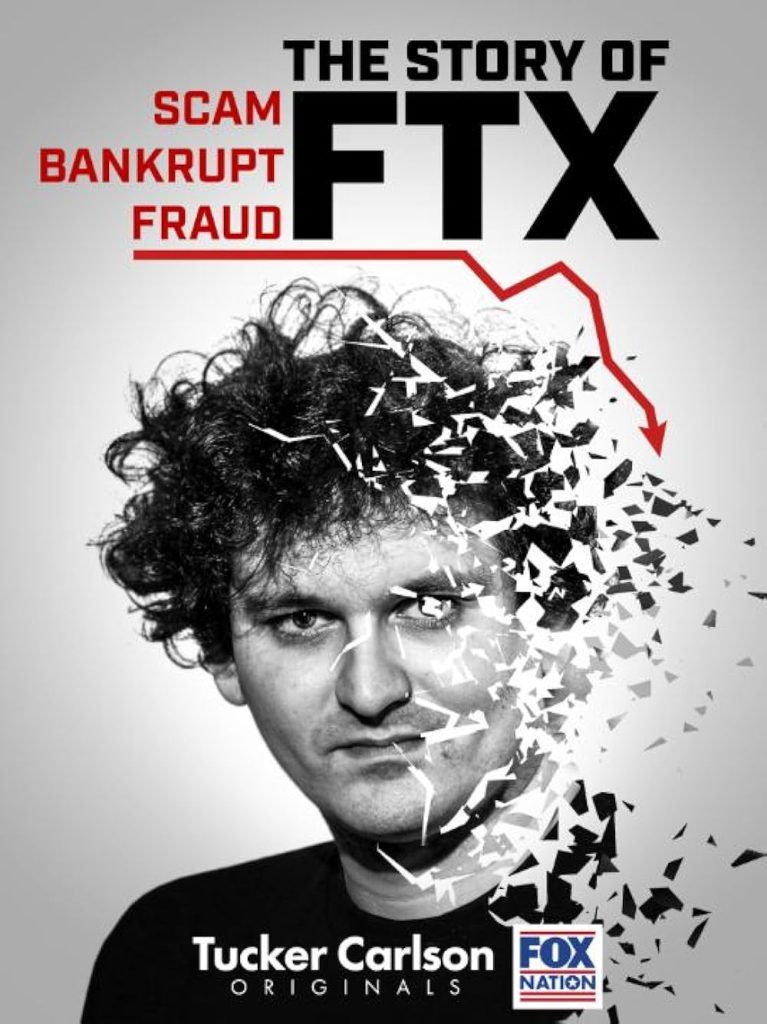
The FTX scandal was fundamentally a case of deliberate misuse and commingling of customer funds, executed through the close, and illicit, relationship between the exchange (FTX) and the trading firm (Alameda Research).
The Concealed Credit Line: The core fraud mechanism centered on a “concealed credit line” or “backdoor” that provided Alameda Research with unfettered, undisclosed access to the customer funds deposited on the FTX exchange. When the crypto market crashed in mid-2022, lenders recalled funds from Alameda. Rather than allowing Alameda to fail, FTX silently used its customer deposits—money intended for trading and storage—to loan Alameda the needed capital to cover its demands.
The massive deficiency was starkly illustrated by a balance sheet published shortly after the collapse, showing $9 billion in liabilities and only $900 million in assets that could be easily sold. Among the damning entries was a “hidden, poorly internally labeled ‘fiat@’ account” with a balance of negative $8 billion, underscoring the severity of the hidden transactions.
Operational Laxity and Lack of Controls: Adding to the deliberate deceit was an astonishing degree of operational failure and mismanagement, which the new CEO, John J. Ray III (who previously led Enron through its bankruptcy), described as a dire picture.
Post-collapse investigations found that FTX lacked the most basic financial infrastructure:
- Non-existent Financial Controls: FTX did not have experienced personnel for risk management, audits, or accounting procedures. Most financial policies were either generic or nonexistent for a firm handling billions in assets.
- Informal Bookkeeping: Invoices were handled via instant messaging, and bookkeeping was conducted using basic accounting software typically designed for small businesses.
- Security Failures: Private keys necessary to move crypto assets were often left in unencrypted files, and assets were left unsecured in “hot wallets” connected to the internet.
- No Documentation: There were no formalities or proper documentation for intercompany transactions, allowing liabilities and assets to transfer freely between insiders, SBF’s parents, and the FTX Group entities without checks and balances.

WARNING SIGNS (RED FLAGS): Lessons from the Crash
For the observant crypto investor, the FTX collapse highlighted several identifiable warning signs, both concerning governance and the underlying economic architecture of the industry.
1. Lack of Audited Transparency: FTX, as a private company, did not produce balance sheets showing assets and liabilities using standard financial reporting procedures, nor were its balance sheets ever properly audited. This opacity was a crucial enabler of the fraud, meaning there was no public record to verify if the company held enough cash or assets to cover customer liabilities. The absence of comprehensive, third-party audited financial records in any centralized exchange should be considered a significant red flag.
2. High-Yield Promises and Aggressive Marketing: The promise of high yields, coupled with elaborate advertising campaigns and celebrity endorsements, was a key strategy FTX used to attract retail and institutional capital. Yield-seeking behavior among investors, where borrowed funds are chased into high-yield platforms, often overlooks the underlying risk structure necessary to generate those returns. These marketing efforts cultivated an image of unshakable legitimacy that helped mask the internal rot.
3. Interdependence and Collateral Risk: The close financial entanglement between FTX and Alameda Research, where one entity’s stability relied entirely on the other’s proprietary token (FTT), created catastrophic systemic risk. Furthermore, the ongoing surge in the crypto lending market (reaching $73.6 billion in outstanding loans by Q3 2025, surpassing pre-FTX peaks) shows that while the “structure is stronger,” the risks remain. Analysts warn that the architecture remains deeply interconnected—with DeFi protocols lending into centralized brokerages, which then lend further—and much debt is still collateralized by highly volatile assets like Bitcoin and Ethereum. The same triggers that caused the FTX failure—interdependence and volatile collateral—remain present in the current environment.
4. The Founder’s Contradictions and Behavioral Signals: SBF cultivated a public image of an “everyman,” often appearing in nondescript clothing while espousing effective altruism. This image distracted from the fact that he was simultaneously living a lavish lifestyle in the Bahamas and using FTX customer funds to buy personal luxury items and finance political donations. When the crisis hit, SBF’s bizarre media blitz, in which he admitted to getting “a little cocky” and “messy accounting” but insisted he didn’t knowingly commit fraud, further highlighted a concerning disconnect from the gravity of his actions.
WRITER’S COMMENTARY: Preventing the Next Collapse
The FTX saga revealed that the crypto industry’s largest failure was not a complex, technical flaw in the blockchain but a simple, fraudulent failure of trust—what the new CEO termed “old fashioned embezzlement”.
Core Cause Assessment (Why the Scam Succeeded): The scam flourished in the toxic overlap of centralized custody, regulatory ambiguity, and extreme velocity of growth. FTX operated as a massive, unregulated shadow bank, allowing billions of dollars to pass between related entities without any formal documentation, checks, or balances. The success was underpinned by the investor impulse to trust a charismatic figure and the fatal flaw of centralized exchanges: holding both the user’s funds and the internal ledger. In the absence of federal deposit insurance (unlike U.S. banks), when FTX filed for bankruptcy, customers had no backup. The system was designed to reward high-speed, opaque centralization, making SBF’s internal theft essentially inevitable once internal ethical checks evaporated.
Proposals for Prevention:
- Mandatory Proof-of-Reserves and Segregated Custody: Regulation must enforce a strict separation between exchange trading operations and customer custody. Technology should be mandated for real-time, independently verifiable proof-of-reserves, ensuring that the total assets held exactly match customer liabilities, eliminating any possibility of a hidden credit line or “backdoor” access for affiliated hedge funds.
- Leverage and Interconnection Disclosure: Given the renewed surge in crypto lending ($73.6 billion in loans) and the increasing entanglement of DeFi and centralized markets, regulators must mandate clear, standardized public disclosures on inter-entity lending and collateral dependency. This would identify high-risk, layered borrowing flows (e.g., DeFi to brokerages) that could trigger systemic contagion if asset prices reverse sharply.
- Global Minimum Auditing Standards: For any exchange handling significant global volumes, national regulators must agree on and enforce independent, comprehensive, GAAP-compliant auditing and internal control standards. Reliance on informal bookkeeping or the absence of audits for private crypto firms handling public money should be legally penalized, thereby replacing subjective trust in founders with objective, enforceable financial rigor.
The lesson of FTX is clear: while blockchain technology offers decentralization, the largest exchanges reintroduced the very central points of failure and corruption that cryptocurrency was designed to bypass. The pursuit of high returns without due diligence—and without regulatory oversight of centralized custodians—is merely an invitation for fraud.
REFERENCES
- financefeeds – $73B Crypto Lending Boom Shows The Market Has Rebuilt Its Leverage After FTX Collapse
- nerdwallet – FTX Crash: Timeline, Fallout and What Investors Should Know
- thestreet – Sam Bankman-Fried alleges famous investigator is Binance founder: ‘Come on CZ…’
- yahoofinance – FTX Founder Sam Bankman-Fried Says This Was His ‘Single Biggest Mistake’