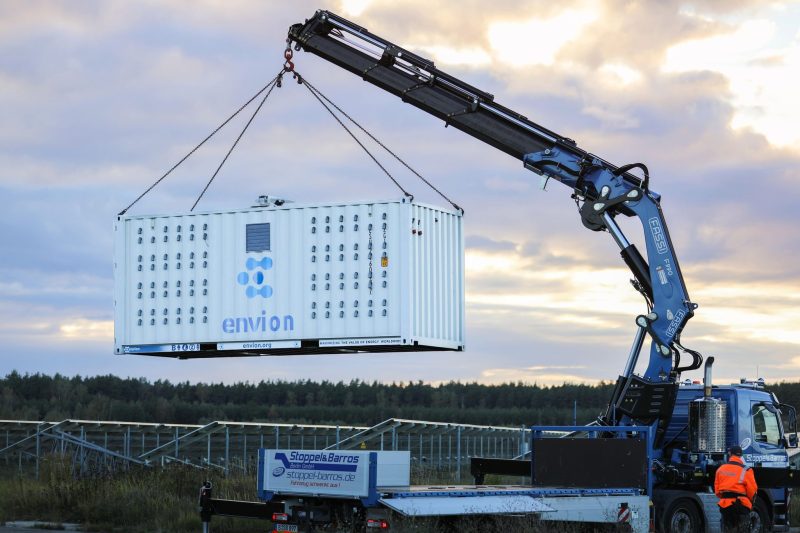
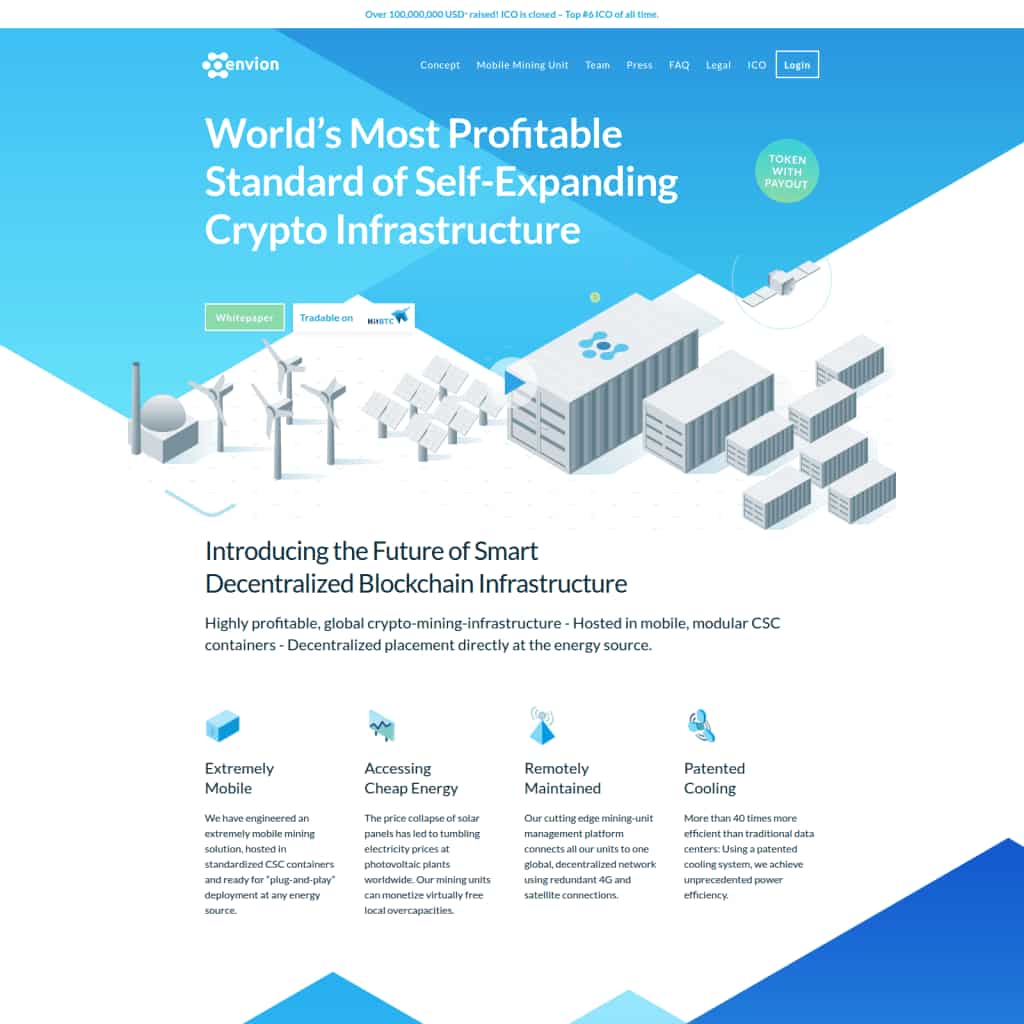
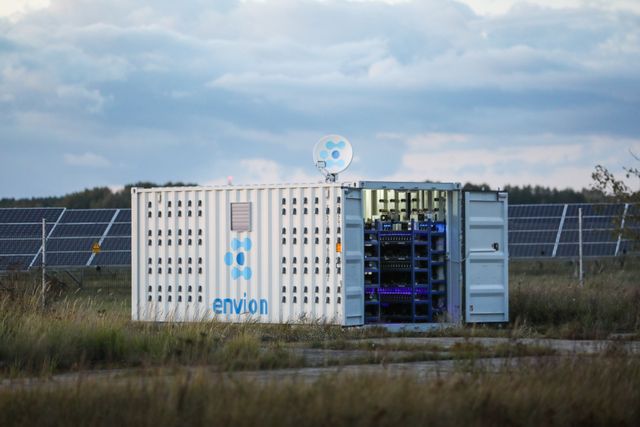
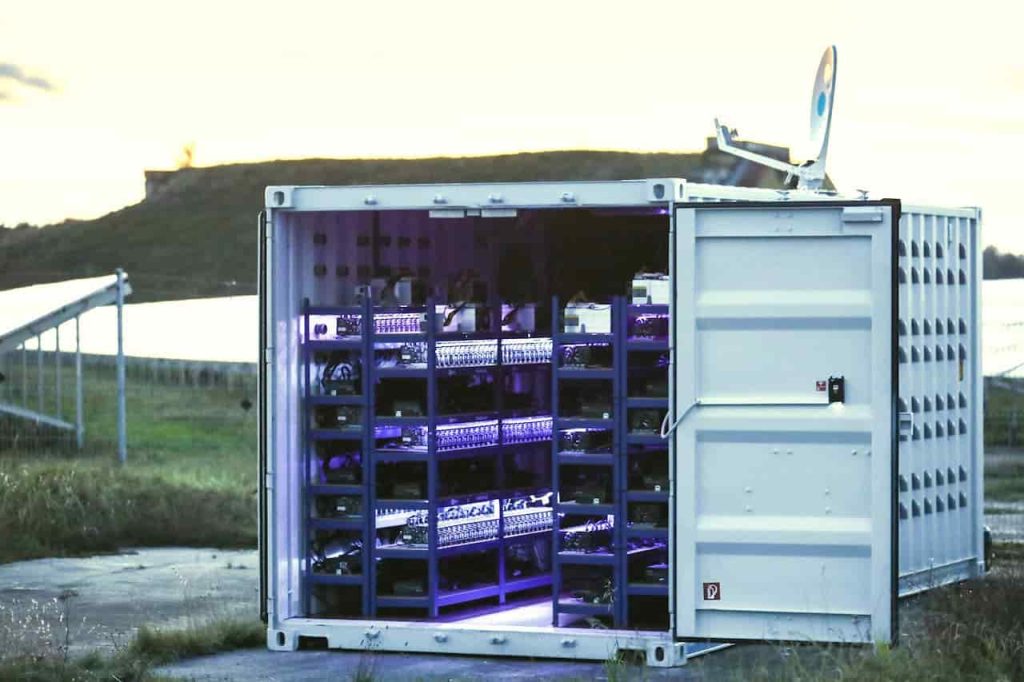
The Envion saga stands as one of the most dramatic and financially destructive failures in the history of the Initial Coin Offering (ICO) space. Launched in late 2017, the Swiss-based cryptocurrency mining firm Envion AG raised approximately $100 million (or 100 million francs/euros) from a staggering 37,000 investors globally. The promise was revolutionary: creating Mobile Mining Units (MMUs) designed to harness cheap, excess green energy for environmentally friendly Bitcoin and Ethereum mining.
The project started with significant hype and potential, backed by an experienced CEO and what appeared to be a working product. However, within months, the company was engulfed in a ferocious internal conflict, legal battles, allegations of fraud, and regulatory crackdowns. The company, based in Zug, Switzerland, was eventually ordered to shut down and liquidate after the Swiss Financial Market Supervisory Authority (FINMA) ruled that the entire ICO was illegal activity.
This forensic analysis breaks down the mechanisms that allowed this massive failure to occur, focusing on the sophisticated corporate coup, the alleged technical manipulation, and the blatant financial misappropriation that followed the fundraising peak.
Technical Mechanism and Core Contradictions: The Envion Fraud Blueprint
The Envion ICO did not fail simply because the underlying business model—mobile mining units accessing local clean energy—was flawed. It failed because the technical and corporate control structure was leveraged for an internal war that ultimately destroyed the company’s ability to operate and secured the investor funds for bad actors.
Anatomy of the Hostile Corporate Takeover
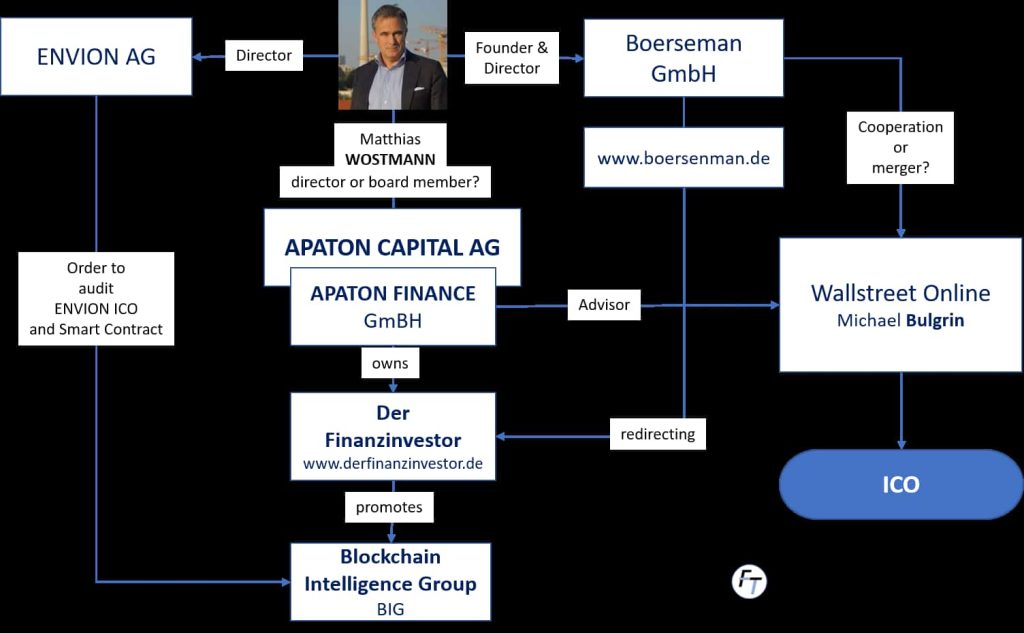
The central conflict involved CEO Matthias Woestmann and the hidden mastermind/founder, Michael Luckow, who managed the operational side through his company, Trado GmbH. Luckow and his founding partners initially held 81% of Envion AG’s shares through Trado GmbH. Luckow, though the primary idea generator and operational lead, was not mentioned in the company’s official registration and opted to remain in the background, ostensibly for expediency, by transferring his shares to Woestmann temporarily.
The founders accused Woestmann of executing an “analogue hacking” or a hostile takeover.
The Mechanism of Dilution: Woestmann allegedly used temporary powers granted to him to aid the ICO process to initiate a covert capital increase. Woestmann, through his associates Thomas van Aubel and Jutta Freifrau von Falkenhausen (via their company Sycamore GmbH) and Quadrat Capital, increased the number of shares. This action drastically diluted the founders’ 81% stake down to 31%, enabling Woestmann and his associates to gain controlling interest (61.5%). Woestmann was referred to by investors and Luckow as a “henchman” or “lackey” for Van Aubel.
The feud developed rapidly, with contact between the CEO and founders reportedly cut for four months starting in January 2018, without investor knowledge.
The Battle Over Token Manipulation
Both sides immediately hurled accusations regarding the integrity of the EVN tokens:
- Woestmann’s Claim: The CEO claimed that the founders illegally generated an additional 40 million tokens (later downgraded to 20 million tokens) without the Board’s knowledge, parking them in virtual wallets and selling them on crypto exchanges, thereby diluting investor value. Woestmann implemented a token swap, promising to refund legitimate ICO token holders but requiring buyers of the “illegal” tokens to sue the creators.
- Founders’ Counter-Claim: The founders (Luckow/Trado) claimed Woestmann’s fraud charges were a “fictitious construct” meant to distract from their own legal filings against him. They insisted their subsequent token sale was necessary to fund Trado GmbH and Envion itself after Woestmann allegedly stopped paying for hardware and staff wages.
- Investor Allegations: A pseudonymous investor claimed the founders had manipulated the smart contract after the audit, adding a function that allowed them to receive and sell tokens during the token freeze period, potentially violating SEC regulations.
Despite the conflicting narratives, the result was clear: the business operation came to a complete standstill amidst the “civil war,” leaving 30,000 investors stranded.
Financials and Embezzlement: Tracking the Missing Millions
While the founders and the CEO fought over corporate control, a substantial portion of the ICO proceeds—held primarily in cryptocurrencies—was siphoned away, mostly through the actions of the hidden mastermind, Michael Luckow.
The Man-in-the-Middle Capital Diversion
The most devastating financial mechanism was the alleged embezzlement orchestrated by Michael Luckow. Although Luckow was not officially listed in the prospectus or on the website, he alone controlled the keys to Envion’s crypto wallets.
During the ICO, Luckow decided to redirect millions of Euros of investor funds intended for Envion AG to his private accounts instead. This conduct is deemed criminal from multiple perspectives.
The Embezzled Assets: Luckow embezzled over 500 Bitcoin and 9,000 Ether, which, depending on the exchange rate used, were valued between 10 and 18 million euros. This redirection was likened to a man-in-the-middle attack, where Luckow illegally inserted himself into the payment flow between investors and Envion AG.
Forensic analysis of Luckow’s private bank accounts during and immediately after the ICO (December 2017 to September 2018) revealed unusually large transactions. Before the ICO, typical transfers were a few hundred euros; afterward, they ballooned to 5- and 6-digit amounts.
The Flow of Illegal Funds and Money Laundering
Extensive documentation indicates that high incoming payments, likely from crypto sales, totaled over 8.3 million euros via 175 transactions larger than €15,000.
Key Findings on Fund Misappropriation:
- Only a Fraction Reached Envion: Luckow transferred only a fraction—250,000 euros—to Envion AG.
- Trado GmbH Received Bulk: Around 6.8 million euros went to Trado GmbH, the company managed by Luckow.
- Concealment and Laundering: The assets were evidently sold, moved, disguised, and laundered. This activity involved 41 large transactions (between €50,000 and €100,000) through the exotic trading exchange Quoine Corporation, which is internationally suspected of money laundering.
- Intermediary Funnel: Luckow also sent 555,000 euros to an intermediary, Jan-Tobias Hensel, which subsequently flew back to Luckow’s other accounts in small batches. Large chunks were also directed to dubious companies suspected of money laundering, such as MOGW Energy Trade (Portugal) and Crypto SP (Poland).
These funds are now missing from the liquidation estate, potentially reducing the compensation available to investors and creditors. The Swiss liquidator is currently claiming the missing 8.3 million Euros via a lawsuit at the Berlin Regional Court.
Red Flags and Legal Status: Regulatory Crackdown and Judicial Inertia
The success of the Envion ICO was predicated on skipping standard financial and legal compliance steps, which soon triggered regulatory action.
Critical Red Flags Ignored by Investors
Despite the promise of a working product and high returns, several critical red flags were present from the outset:
- Missing Hidden Mastermind: Michael Luckow, the core idea generator and controller of the funds, was intentionally not mentioned in the Envion prospectus or company registration. He chose to remain in the background.
- Lack of Legal Compliance/Auditing: Envion was warned by lawyers, but proceeded with the ICO without securing a state-supervised revision firm, which was necessary for such a transaction. The lack of a required auditing function was later cited by the Zug court as a reason for ordering the company’s shutdown. Envion’s auditors, PwC, later resigned after hearing about the alleged illegal tokens.
- Incomplete Prospectus: The Landgericht Berlin (Regional Court of Berlin) ruled that the investment prospectus was incomplete because many risks were not disclosed. This led to rulings that compelled the operational entity behind Envion AG, Trado GmbH, to pay damages to large investors.
- Exaggerated Returns: The promise of returns noted at up to 161 percent during a period of crypto euphoria should have signaled caution.
The Illegal ICO Verdict and Liquidation
The Swiss regulator, FINMA, stepped in during July 2018. FINMA eventually ruled that Envion AG had seriously violated supervisory law because it had unlawfully accepted public deposits (US dollars, Bitcoin, and Ethereum) from at least 37,000 investors without possessing the necessary banking license. FINMA characterized the EVN tokens as being issued in a “bond-like form”.
The Cantonal Court of Zug subsequently ordered the dissolution and liquidation of Envion AG in November 2018, less than 13 months after its inception, citing the company’s lack of a functional board and auditing.
Legal Status and Investor Compensation
The liquidation process remains ongoing.
Challenges for Investors:
- Non-Shareholder Status: Under Swiss law, ICO investors who purchased tokens are generally not considered shareholders of Envion AG. Therefore, they are often excluded from the distribution of assets during standard liquidation proceedings.
- Need for Litigation: To secure returns, investors must file claims for damages against the individuals and entities responsible for the prospectus and operational fraud. Dozens of investors have successfully sued Michael Luckow and Trado GmbH for prospectus fraud before the Berlin Regional Court.
- Wasted Funds: Even with liquidation underway, estimates suggest roughly half of the original $100 million is gone, partially due to the steep decline in cryptocurrency prices following the ICO. Liquidation costs alone are projected to reach millions of euros (8.2 million CHF).
A Berlin Judicial Scandal?
Despite the clarity of the illegal fund flow evidence and court rulings against Trado, the Berlin public prosecutor’s office has been strongly criticized for its failure to act.
EnvionWatch documentation highlights what is termed a “judicial scandal” regarding the investigation into the alleged embezzlement of 500 Bitcoin and 9,000 Ether. Critics argue the public prosecutor’s office has demonstrated a fundamental lack of will or capacity, noting:
“How can a prosecutor’s office ignore it when a hidden mastermind of a scam crypto ICO channel millions of Euros of investor funds to his private accounts?”.
The prosecution’s official record is dismal: 0 aggrieved parties contacted, 0 criminal complaint filers contacted, 0 assets secured, 0 arrests, and 0 accused. This inaction, according to observers, signals that it is “embarrassingly” easy to embezzle and launder large amounts of money semi-smartly in Germany without consequence.
Writer’s Commentary
The core psychological and technical cause behind the Envion ICO’s immediate and explosive success—and its subsequent catastrophic collapse—was the weaponization of speculative trust.
The project offered two forms of unparalleled confidence during the 2017 crypto boom: the technical promise of solving crypto’s energy crisis (“green mining”) and the financial lure of guaranteed, unprecedented yields (161%). This created an environment of blind euphoria, overriding the need for fundamental due diligence. Technically, the founders exploited a critical centralization vulnerability: while the fundraising mechanism (ICO) appeared modern and decentralized, the underlying financial control—the private keys to the wallets—remained entirely in the hands of a single, hidden entity (Michael Luckow). The market’s overwhelming desire for quick, compliant wealth allowed 37,000 people to invest in an enterprise whose true financial structure and legal exposure (lack of a banking license, incomplete prospectus) they could not—or chose not to—verify. The failure was rooted not in complex code, but in the simple, central flaw of placing decentralized billions under the physical control of an individual, sheltered by an opaque corporate structure.
REFERENCES
- fintelegram – Envion Crypto Scandal! About The Discovered Millions And Sleeping Prosecutors!
- handelsblatt – Neue Hoffnung für Anleger im größten deutschen Krypto-Skandal
- winheller – Envion-ICO: Fehlerfreier Anlageprospekt unabdingbar
- ccn – Envion ICO Scandal: Court Rules in Cryptocurrency Mining Firm Founders’ Favor
- fintechnews – Swiss Regulator Takes Action Against ICO Issuer, 100 Mio CHF to be Returned to Investors