
Overview: The Collapse of a “Too Big to Fail” Cryptocurrency Fraud
From April 2014 through December 2019, the BitClub Network (BCN) operated a massive cryptocurrency fraud, ultimately conning hundreds of thousands of investors out of at least $722 million. The federal indictment characterized BCN as an elaborate scam—an updated version of a classic Ponzi scheme—masquerading as a legitimate Bitcoin mining operation.
The core pitch was enticing, especially during the peak of the Bitcoin frenzy: for a $100 membership fee and an investment starting as low as $500, investors could purchase a share in a Bitcoin mining pool. Promoters claimed investors were “buying the goose that lays the golden egg,” or acquiring “machines that print money,” promising daily dividends paid in Bitcoin. BCN even bragged about being “the most transparent company in the history of the world” and one of the “top 10 crypto currency mining operations globally”.
However, behind the facade of high-tech legitimacy was a scheme built on contempt, manipulation, and brazen greed. Prosecutors allege that the operators ran a Ponzi structure, making exaggerated claims about mining capability, doling out inflated earnings to early investors to attract more victims, and taking massive rake-offs for themselves through a multi-level marketing (MLM) setup.
The main defendants charged in connection with the BitClub Network conspiracy included:
- Matthew Brent Goettsche (Creator/Operator).
- Jobadiah Sinclair Weeks (Top Promoter/Spokesman).
- Silviu Catalin Balaci (Programmer).
- Joseph Frank Abel (Promoter).
- Russ Albert Medlin (Purported CEO/Founder).
- Gordon Brad Beckstead (Money Launderer/Former CPA).
The Deep Fraud Mechanism: Faking the Blockchain
The success of BCN relied on convincing investors that their money was being used to generate new Bitcoin via the complex process of mining, while in reality, the company was manipulating data and diverting funds.

The Insider’s Contempt: Building on the Backs of “Idiots”
Internal communications obtained by federal investigators revealed the perpetrators’ disdain for their investor base. Matthew Goettsche, one of the primary operators, frequently targeted “the typical dumb MLM investor”.
Goettsche’s emails and online chats leave little doubt about the fraudulent nature of the operation:
“We are building this whole model on the backs of idiots,” Goettsche explained to programmer Silviu Balaci.
“We can make up the numbers any way we want to appease auditors,” Goettsche stated in another exchange with Balaci.
He referred to the investors as “sheep,” noting that “The leaders know,” how the money is split, but “It’s the sheep that don’t”.
In September 2017, Goettsche outlined an 8-step scheme to cash out, concluding with Step 8: “We retire RAF [rich as fuck]!!!”.
Technical Manipulation and Synthetic Earnings
Silviu Catalin Balaci, the Romanian programmer, was instrumental in creating the illusion of legitimate mining profitability.
In the early phases, when actual mining capability was insufficient, Goettsche directed Balaci to create fake evidence. Balaci confirmed that his role was to inflate the website’s mining activity to fool the “sheep” into sticking around. In October 2014, Goettsche instructed Balaci: “We may need to fake it for the first 30 days while we get going… It needs to look real”.
The fake numbers were not just minor adjustments. In one instance in 2015, Goettsche asked Balaci to “bump up the daily mining earnings” by 60 percent. Balaci recognized the danger, exclaiming that such a hike was “ponzi territories and fast cash-out ponzi,” yet he executed the order. The plan was to “dilute over time” so members would believe the changes were due to “strong growth”.
Despite later acquiring some genuine mining capacity—with BCN claiming to have received mining awards of over 88,904 Bitcoin and 508,695 Ethereum, valued conservatively between $300 million and $500 million—the fraudulent structure remained.

The Misleading Financial Split
BitClub Network’s financial model was designed to extract maximum funds for commissions and operating costs before any substantial mining occurred.
The indictment revealed the three-way split of investor funds:
- 20 percent for operating expenses.
- 40 percent for commissions.
- 40 percent for mining equipment.
Crucially, Balaci noted that most investors did not know that only 40 percent was actually used for mining, and the rest (60 percent) went to commissions and overhead.
Furthermore, BCN concealed major operating costs. The enormous electricity cost involved in Bitcoin mining, which consumed roughly a third of the mining revenue stream, was being paid out of the investors’ earnings, a detail BCN tried to keep “on the down-low”. Promoter Joby Weeks was even surprised to learn this, thinking the costs came out of the “rebuy” portion.
Red Flags: Warnings of the High-Tech Pyramid
Experienced observers, including blogger Ofir Beigel of 99Bitcoins, began sounding alarms about BCN years before the arrests, noting several classic indicators of a fraudulent scheme.
The Cult of Personality and MLM Hype
Jobadiah Weeks, the primary spokesman, used his globe-trotting lifestyle—chronicled on his WeeksAbroad.com website—to sell the dream of financial liberation. Weeks presented a casual, sincere image, the “antithesis of the uniform of Wall Street corporate tools,” selling his personal legend: “The Secret of How to Be Me”.
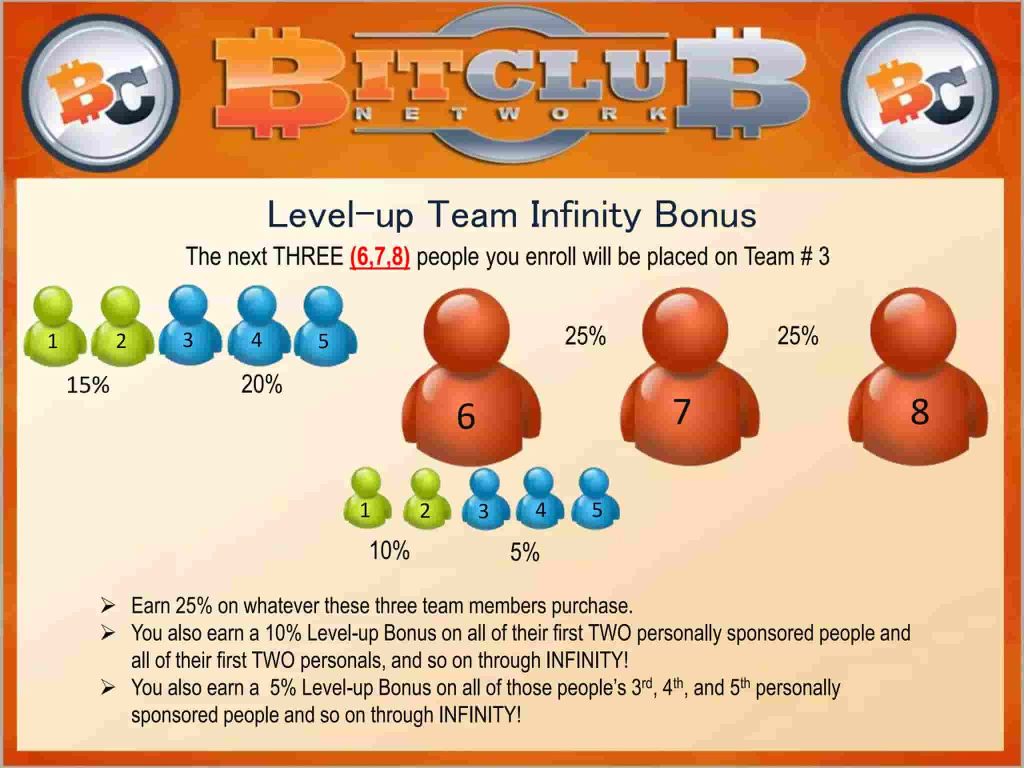
BCN leveraged this persona through a heavy MLM component, promising “passive income” and high commissions for recruiting new members, with promises that “every single sale through your tree counts to infinity”. Weeks himself became one of 104 “monster builders” in the pyramid.
Lack of Accountability and False Proof
The company operated under a veil of extreme anonymity. The BCN website leadership was described vaguely as “a team of experts, entrepreneurs, professionals, network marketers, and programming geeks” but listed no names. Even their promotional videos on YouTube, which featured speakers giving tips and instructions, did not identify the individuals speaking, and the comments sections were disabled—a red flag to prevent negative reviews.
BCN also used fabricated endorsements:
Bogus Testimonials One supposed customer, “Victor Diaz from Brazil,” was identified using the photo of a convicted rapist in India.

Evasion of Regulatory Oversight
The company went to specific lengths to evade detection by U.S. authorities and the Securities and Exchange Commission (SEC).
BCN offered shares in their mining pool, which were deemed unregistered securities by the federal government. To sidestep regulations, Weeks directed American investors to use Virtual Private Networks (VPNs) to camouflage their U.S. IP addresses. Weeks suggested this would allow investors to avoid reporting income to the IRS:
“All the money you make is NOT reported to the tax man so…it’s like having an offshore account growing for you tax free,” Weeks wrote to a potential investor.
Weeks, who has a history of libertarian interests and a fascination with unregulated microcountries, even suggested that American investors were “property” of the government due to regulations.
Legal Status: Indictments and Guilty Pleas
The dream blew up in late 2019 and early 2020 with the arrests of the key co-conspirators on charges including conspiracy to commit wire fraud and conspiracy to offer and sell unregistered securities. These charges carry severe penalties, including potential prison sentences of up to 25 years.
Co-Conspirator Admissions
Several defendants have pleaded guilty, providing confirmation of the fraudulent nature of the operation:
- Silviu Catalin Balaci pleaded guilty in July 2020 to conspiracy to commit wire fraud and conspiracy to offer and sell unregistered securities. He confirmed the scheme defrauded investors of $722 million.
- Joseph Frank Abel pleaded guilty in September 2020 to conspiracy to offer and sell unregistered securities and filing a false tax return (failing to report approximately $1 million in income).
- Jobadiah Sinclair Weeks pleaded guilty in November 2020 to conspiracy to sell unregistered securities and tax evasion. Weeks admitted failing to report at least $10 million in income, including cryptocurrency earnings from his association with BCN, between 2015 and 2018.
- Gordon Brad Beckstead, a Nevada man and former CPA, pleaded guilty in March 2022 to money laundering conspiracy and aiding in the preparation of a false tax return. Beckstead laundered over $50 million and helped Goettsche evade tax reporting on more than $60 million in total income, which allowed Goettsche to avoid paying over $20 million in federal income taxes.
Fugitive Status and Extradition
Russ Albert Medlin, the purported CEO and a convicted sex offender, was the last defendant to be apprehended. After fleeing the U.S., Medlin was arrested in Indonesia in June 2020 for an unrelated issue: paying underage girls for sex. Indonesian police indicated their willingness to extradite him to the U.S. to face the BitClub charges.
Writer’s Commentary
The foundational reason the BitClub Network achieved such staggering success and longevity—defrauding victims of $722 million over five years—was the calculated collision of psychological seduction and technical opacity. Psychologically, the scam thrived by co-opting the libertarian, anti-establishment ethos that defined early cryptocurrency adoption. Joby Weeks, the primary salesman, didn’t sell financial security; he sold the “Secret of How to Be Me,” an image of absurd, tax-free wealth untethered from banks or governments. This anti-corporate, “LIVE A GREAT STORY” narrative provided an ideological shield against skepticism.
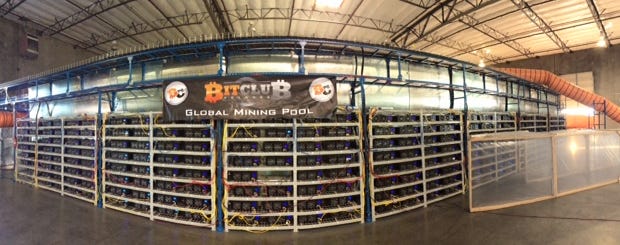
Technically, the arcane nature of Bitcoin mining provided perfect camouflage. For the average “dumb MLM investor” (as the founders called them), verifying the hash rate or the complex block rewards was impossible. The illusion of legitimacy could be maintained simply by showing warehouse videos and displaying synthetic daily dividends, which programmers like Balaci could “bump up” by 60% on demand. The victims weren’t just investing in technology; they were buying into a highly personalized, aggressively marketed revolution whose inner mechanics were intentionally too difficult for the average person to audit. This confluence of cult-like marketing and technical fog allowed the operators to loot hundreds of millions while laughing at the “sheep” funding their “rich as fuck” retirement.
REFERENCES
- westword – The Rise and Fall of a Bitcoin Mining Scheme That Was “Too Big to Fail”
- coingeek – Romanian programmer pleads guilty in $722M BitClub Ponzi scam
- 2news – Henderson man facing up to 20 years in prison for cryptocurrency scam
- forklog – BitClub Network mining-pool organizer pleads guilty to $722 million fraud