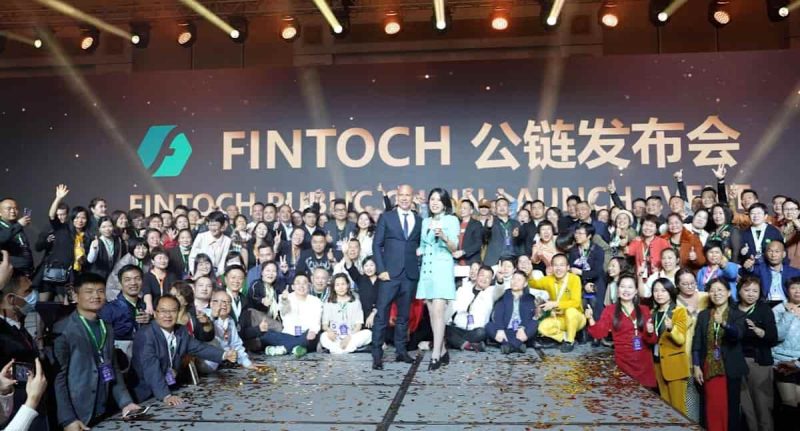
The digital asset world, often lauded for its transparency and innovation, remains haunted by schemes that expertly weaponize deception, theatrical fraud, and the seductive promise of effortless wealth. Few recent frauds illustrate this vulnerability more starkly than the collapse of FINTOCH (also known as Morgan DF Fintoch), a high-yield investment platform that vanished in 2023 after draining millions from unsuspecting investors across Asia and globally.
The case culminated in late 2025 with the dramatic cross-border arrest of an alleged mastermind in Thailand, exposing a sophisticated global fraud network built on fabricated corporate identity, false institutional backing, and, most damningly, a CEO who was merely a paid actor.
CASE SUMMARY: The Promise and the Plunge
FINTOCH presented itself as a groundbreaking peer-to-peer (P2P) blockchain financial platform, offering a suite of decentralized financial services including borrowing, lending, and investment. The project promised to be a provider of DeFi solutions that reduced complexity for traditional investors. The platform claimed to utilize exclusive, high-security technology called “HyBriid,” which supposedly combined multi-signature technology and zero-knowledge proof to provide users with “zero-risk blockchain investments”.
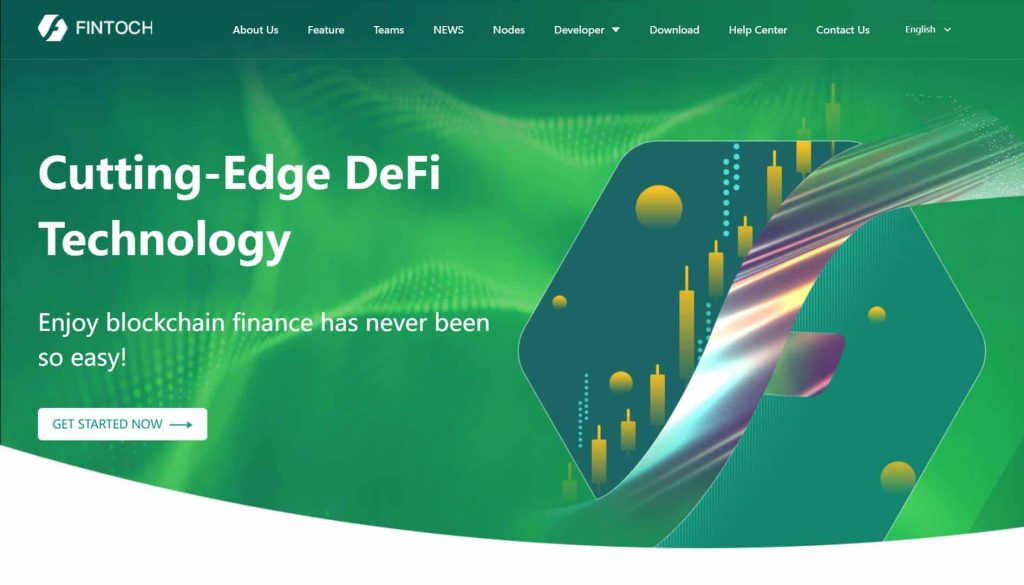
The most potent element of FINTOCH’s allure, however, was its promise of a guaranteed 1% daily return on investment (ROI). This staggering return rate attracted victims across multiple Asian countries, as well as in Europe and North America. The platform operated roughly between December 2022 and May 2023.
Despite high-profile promotional events, including a public chain launch in Macau attended by over 2,000 guests in February 2023, and claims of major corporate milestones, the scheme collapsed rapidly. In May 2023, the operation executed an “exit scam” (or rug-pull). Investors suddenly reported being unable to withdraw their funds. On-chain investigator ZachXBT confirmed the catastrophic end, noting that the team had withdrawn $31.6 million USDT from the Binance Smart Chain (BSC).
WARNING SIGNS: The Theater of Fraud
FINTOCH’s success hinged entirely on fabricating credibility, weaving together a complex tapestry of red flags that, in retrospect, signaled a classic confidence trick. For the general crypto-interested public, these elements serve as critical cautionary indicators:
1. The Institutional Illusion
FINTOCH marketed itself heavily as “Morgan DF Fintoch” and falsely claimed to be backed by, or affiliated with, the major investment giant Morgan Stanley. This attempt to piggyback on established trust is a hallmark of sophisticated scams. In reality, Morgan Stanley publicly refuted these claims before the collapse, clarifying that FINTOCH was using its trade name and trademark without authorization, and that the bank had no affiliation or relationship with the platform.
2. The Fictitious Face of Leadership
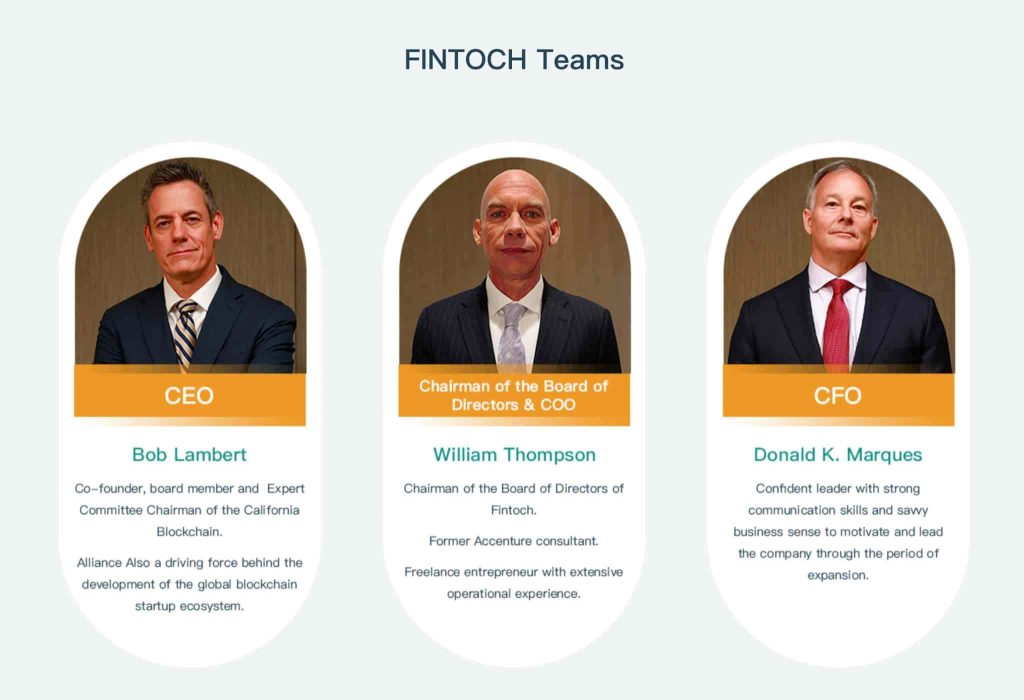
In a highly publicized display of corporate legitimacy, FINTOCH featured a supposed CEO named “Bobby Lambert” or “Bob Lambert“. Investigations revealed that Lambert was an entirely fictitious persona, and the face used in promotional materials was that of Mike Provenzano, a paid actor known for small film roles, who had no connection to financial services. The sources confirm this tactic was systematic: security firm CertiK later identified that the identical executives used in FINTOCH’s subsequent rebranding attempts (like Standard Cross Finance) were all entertainment industry actors, not finance professionals.
3. Unrealistic Profit Guarantees
The promise of a 1% daily return on investment (ROI) is perhaps the clearest red flag. Such high and consistent returns, particularly labeled as “guaranteed,” are unsustainable in legitimate financial markets, volatile or otherwise. This type of return structure is classically indicative of a Ponzi scheme, where payouts to earlier investors are derived solely from the new capital injected by later investors, rather than actual profit generation.
4. High-Gloss, High-Pressure Promotion
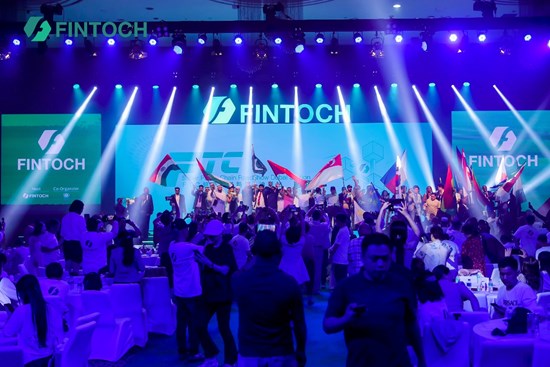
To maintain the facade, the team organized lavish, high-visibility promotional events. In May 2023, just weeks before the exit scam, FINTOCH held events in Dubai, attracting representatives from 19 countries and featuring purported blockchain experts. At this event, William, listed as Chairman of FINTOCH’s Board of Directors, announced ambitious plans for an FTC public chain and a NASDAQ listing, further enhancing the illusion of long-term viability. This aggressive marketing and sense of high-profile momentum are often used as pressure tactics to encourage swift investment before thorough due diligence can be completed.
5. Prior Regulatory Warnings
Crucially, official regulatory bodies had already sounded the alarm before the platform disappeared. The Monetary Authority of Singapore (MAS) had added FINTOCH to its Investor Alert List in early May 2023. Additionally, the Alberta Securities Commission (ASC) placed the platform on its Investment Caution List in July 2023, warning that FINTOCH was not registered to trade or advise on securities.
SCAM MECHANISM: The Ponzi Blueprint and The Laundering Trail
The core economic mechanism of FINTOCH was a classic Ponzi structure disguised as “P2P blockchain financial platform” offering decentralized finance.
In theory, the platform facilitated lending and borrowing. Borrowers would deposit a 50% margin and could quickly borrow twice that amount, paying high daily interest (2% to 2.5%). Lenders (investors) were attracted by the 1% daily interest rate.
However, internal analysis suggests that the platform consisted almost entirely of investors (lenders) and had very few actual borrowers, confirming the operation functioned purely as a “funds pool” (资金盘) sustained by perpetual new deposits. The platform’s commitment to pay out a daily 1% interest to lenders could only be maintained by constantly acquiring funds from later investors.
The Digital Getaway
When the operation collapsed in May 2023, the perpetrators moved quickly to obscure the stolen funds. The $31.6 million USDT withdrawal from Binance Smart Chain represented a classic “rug-pull”. To avoid tracking, the funds were immediately bridged across multiple blockchains, specifically to the Tron and Ethereum networks. This rapid, cross-chain transfer is a common money laundering pattern utilized in large-scale fraud schemes.
According to blockchain analysis by TRM Labs, the FINTOCH network laundered millions of dollars in USDT through nested services on TRON. The funds were then funneled through a series of bridges and DeFi platforms before being consolidated and cashed out through off-ramp services such as Huione Pay, which was later sanctioned by the U.S. Treasury as a primary money laundering concern, Hawwang Guarantee, and traditional exchanges. Analysts suggest the total flow of illicit funds linked to the network, including associated projects, may exceed USD 100 million.
Furthermore, the fraud network demonstrated a cynical persistence, attempting to relaunch after the initial collapse. In October 2023, the same team deployed a new project called FinSoul, a gaming platform that used market manipulation to drain another $1.6 million in USDT from a liquidity pool, collapsing its token value to near zero within hours. They also rebranded as Standard Cross Finance (SCF).
CONSEQUENCES & LEGAL STATUS: Justice Across Borders
The FINTOCH fraud had a devastating financial impact, estimated by blockchain evidence to exceed $31 million when international victims are accounted for. Chinese reports alone indicated losses of over 100 million yuan, or approximately $14 million, affecting nearly 100 victims. The severity of the incident contributed to a reported 63% year-over-year increase in crypto-related thefts in Q2 2023.
The Mastermind’s Arrest
Justice began to materialize in October 2025 following a coordinated international investigation involving Thai, Chinese, and U.S. authorities.

Thai authorities arrested Chinese national Liang Ai-Bing in Bangkok on October 29, 2025. Liang, described as the alleged mastermind and one of five charged executives, was apprehended at a luxury three-story home office in the Wang Thonglang district, which he had rented since December 2024 for approximately $4,645 monthly.
During the raid, Thai police seized electronic devices, digital wallets, property documents, and an unlicensed Beretta pistol with ammunition, adding criminal weapons charges and illegal entry to his alleged financial fraud activities.
Liang is currently facing extradition proceedings to China to stand trial for financial fraud related to the scheme. The investigation named four alleged accomplices: Al Qing-Hua, Wu Jiang-Yan, Tang Zhen-Que, and Zuo Lai-Jun. Zuo Lai-Jun was briefly arrested by Chinese authorities and released on bail, making him the only suspect who did not flee the country.
This arrest underscores a significant shift in law enforcement strategy, demonstrating the effective combination of on-chain analysis—tracing complex money flows across Ethereum, TRON, and BSC—with traditional intelligence and cross-border cooperation to pursue fugitives and seize assets tied to illicit activities.
WRITER’S COMMENTARY: The Price of Manufactured Trust
The FINTOCH saga is not merely a tale of greed; it is a profound lesson in how manufactured trust exploits the vulnerabilities inherent in a nascent, unregulated decentralized finance space.
The scam succeeded because it masterfully blended high-tech jargon (“HyBriid,” “zero-knowledge proof”) and high-yield promises (1% daily ROI) with the comforting, centralized authority of traditional finance (the Morgan Stanley name, the professional-looking CertiK audit). Investors, desperate for exponential returns often advertised within the crypto community, chose to believe the theatrical performance over fundamental financial skepticism. The core cause of the success was the exploitation of the gap between the revolutionary decentralization promised by DeFi and the human desire for a guaranteed, centralized entity to guarantee risk-free returns. When investors saw the Morgan Stanley name and a supposed Western CEO, they stopped asking the critical question: Where does 1% daily profit come from?
To prevent the next FINTOCH, the industry and regulators must prioritize transparent, mandatory safeguards:
- Mandatory Identity Attestation for Executives: New projects handling significant public funds must be required to submit verifiable, non-actor identities of key personnel (CEOs, founders) to an independent, accredited global registrar. Falsifying this information should trigger immediate, irreversible blacklisting from all major exchanges and DeFi interfaces.
- Regulatory Disavowal Enforcement: Regulators must establish streamlined international protocols that allow established financial institutions (like Morgan Stanley) to issue definitive, legally-binding disavowals that automatically trigger regulatory alerts and sanctions against the offending crypto project in all major jurisdictions (e.g., MAS, ASC, SEC, FINMA).
- Cross-Chain Intelligence Integration: Major decentralized finance protocols and centralized exchanges should be mandated to integrate real-time blockchain intelligence tools that automatically flag and place transactional holds on high-volume fund movements originating from addresses publicly identified by reputable on-chain investigators (like ZachXBT) or global law enforcement as associated with exit scams.
The FINTOCH case demonstrates that in the crypto space, believing in the facade—be it a famous bank’s name or a paid actor’s face—is far more dangerous than the inherent volatility of the underlying assets. Until robust identity and affiliation verification becomes the norm, scams like FINTOCH will continue to remind the public that if a financial opportunity sounds too good to be true, it is usually a highly rehearsed performance.
REFERENCES
- qq – 朋友称分投趣投百万七天赚十万,深圳男子转账当晚便无法提现
- tradingview – Scam Alert: Alleged Morgan Stanley Crypto Affiliate Turns Out to Be Fraud
- theblock – Crypto project disappears with $32 million of funds in likely exit scam
- cryptonews – Alleged Mastermind Behind $31M FINTOCH Exit Scam Arrested in Thailand
- trmlabs – Royal Thai Police Arrest Fugitive Chinese National Behind Multi-Million Dollar Crypto Fraud Scheme