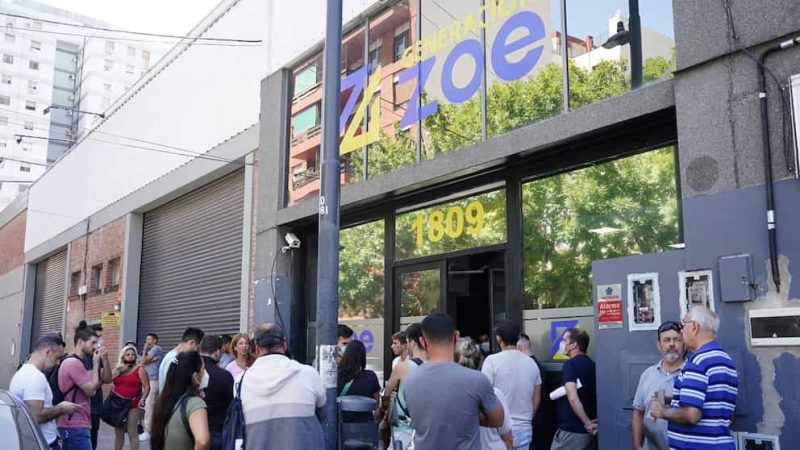
The tale of Generation Zoe, and its charismatic founder, Leonardo Cositorto, stands as a stark cautionary narrative for the global crypto-interested public, illustrating how age-old financial fraud can be modernized and masked by the promise of technological innovation and spiritual transformation. What was pitched as an educational, financial, and spiritual revolution quickly devolved into a massive, multi-jurisdictional pyramid scheme that defrauded thousands of investors across Argentina, Latin America, and beyond.
I. CASE SUMMARY: The Promise of Paradise
Generation Zoe began its journey in 2017, but truly exploded in visibility and scale between 2020 and 2021. At its core, the project was advertised as an “educational and resource-creating community for personal, professional, financial and spiritual development”. Its leader, Leonardo Cositorto, leveraged his background as an evangelical pastor, stock trader, and “ontological coach” to cultivate a magnetic public persona, often appearing in major media as an expert on leadership and cryptocurrency.
Zoe’s pitch was irresistible to those suffering economic insecurity, particularly during Argentina’s period of high inflation and currency devaluation. Investors were lured by the promise of extraordinary returns through access to the financial universe. The scheme promised investors a 7.5% monthly return on their capital, guaranteed over a three-year investment period. This interest rate was described by the judiciary as “sumamente atractivo” because it was far greater than what any traditional financial institution offered.
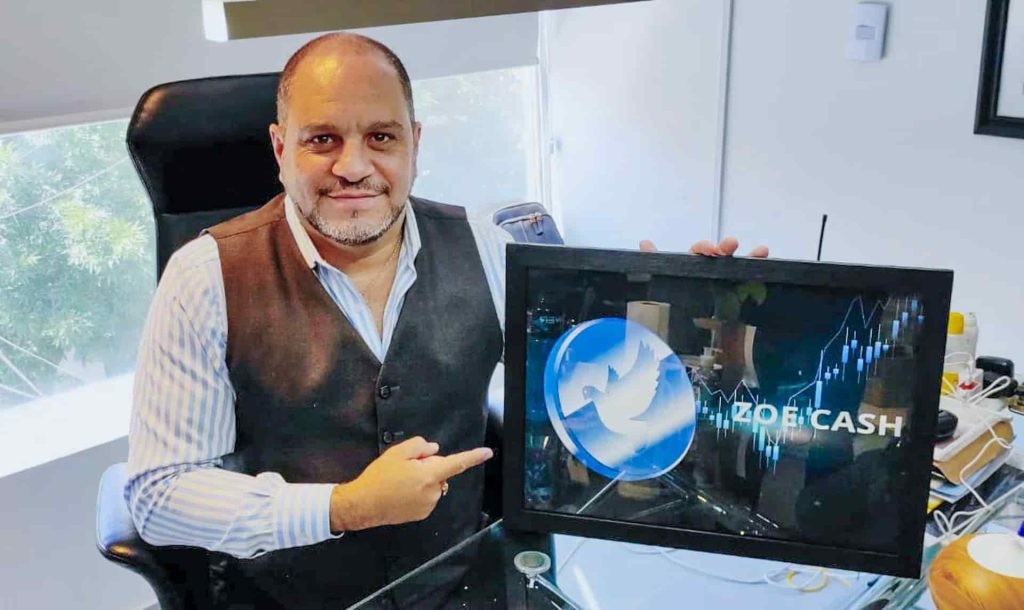
To lend credence to its claims, Generation Zoe constructed a complex, visible facade of legitimacy. The organization launched its own cryptocurrency, Zoe Cash, which Cositorto boldly claimed was backed by gold obtained from the company’s own gold mines. The group’s interests diversified rapidly, acquiring commercial assets such as the Club Deportivo Español, Zoe Burger, Zoe Natural, and expensive real estate, contributing to the appearance of a solid, successful holding. By 2022, Generación Zoe claimed to have 75 branches worldwide.
The downfall, however, was inevitable. Towards the end of 2021, media scrutiny intensified, and regulatory bodies in Paraguay and Argentina issued warnings. Investors, like Karina López, who had trusted the system because payments were initially made “in time and form,” started experiencing delays, vague responses, and ultimately found the offices shuttered. By early 2022, Zoe Cash plummeted in value, and investors were unable to withdraw funds, confirming suspicions that the organization was a Ponzi scheme. Cositorto fled the country in February 2022 and was apprehended by Interpol in the Dominican Republic in April 2022.
II. SCAM MECHANISM (CORE FOCUS): The Architecture of Deception
Judicial investigations across Argentina (Corrientes, Salta, Buenos Aires, Córdoba) determined that Generation Zoe operated as a classic Ponzi scheme, or “esquema piramidal,” despite its elaborate technological and spiritual camouflage.
The Barrier to Entry and Investment Trap: The core mechanism required an initial mandatory investment branded as a “membresía” (membership) to access the system. The minimum entry fee was typically $400, although “Premium” memberships ranged up to $5,000. The contract stipulated a three-year investment duration. Investors who attempted early withdrawal faced a stiff penalty, such as a 50% fine if they tried to pull capital out before 12 months.
The Fictitious Revenue Streams: Generation Zoe fabricated multiple layers of supposed investment sophistication to attract and reassure contributors:
- High-Risk Trading Claims: Cositorto claimed funds were generated through high-risk crypto asset trading and stock market operations.
- Market-Predicting “Robots”: Zoe promoted “robots” (such as the “Christmas robot” or “January Christmas robot”) that allegedly predicted market fluctuations and promised returns of up to 100% over three to seven months. Prosecutor Juliana Companys, investigating the case in Córdoba, explicitly dismissed these claims, stating, “There was no technology involved whatsoever. It was a textbook scam”. A broker testifying in the criminal case described these promised returns as “insane”.
- The Gold Myth: Zoe Cash was marketed as being backed by gold. However, investigators found that this claim was entirely baseless, noting that gold mines in Argentina are legally owned by the state and not available for private sale in the manner claimed.
Crucially, an analysis of the organization’s bank accounts revealed that Generation Zoe’s sole source of revenue was the contributions of the victims themselves. The system was fundamentally dependent on the constant influx of new investors to pay the promised monthly returns to the older members, creating the illusion of profitability. Only an estimated 1% of funds were even invested in Bitcoin; the rest saw “no investments at all”.
The scheme used psychological tactics to ensure retention. When investors signaled they wanted to withdraw their funds—a point at which the pyramid typically stresses—Zoe representatives would immediately pivot to offering a new, more lucrative “robot” or investment opportunity, convincing them to reinvest their supposed profits and deepen their commitment.
III. WARNING SIGNS (RED FLAGS): Ignoring the Siren’s Song

For the skeptical crypto or finance investor, several textbook “red flags” were evident in Generation Zoe’s operations, highlighting the inherent risk of the alleged “opportunity”:
- Unrealistic and Guaranteed Returns: The promise of a fixed 7.5% monthly return (equating to 90% annually, excluding compounding) or the 100% return promised by the “robots” is mathematically improbable and unsustainable in genuine financial markets. Victims noted they were promised “ganancias fijas y aseguradas” (fixed and guaranteed gains) without any mention of risk or potential losses.
- Multi-Level Marketing (MLM) Recruitment: Generation Zoe strongly incentivized investors to recruit new members. Members received substantial commissions (e.g., 20%) on the funds invested by those they referred. This reliance on “duplication” and network growth is a core feature of pyramid schemes.
- Regulatory Warnings and Illegal Status: Authorities recognized the danger early. In September 2021, Paraguay’s National Securities Commission stated that Zoe Capital was unauthorized to operate. Argentina’s National Securities Commission subsequently requested Generación Zoe and Cositorto stop offering “marketable securities”.
- Opaque and Cash-Based Operations: Despite the high-tech facade of cryptocurrency and trading, a significant portion of investments was handled through cash, delivered directly to leaders at the brick-and-mortar locations, with stacks of dollars reportedly circulating with minimal security.
- Cult-like Psychological Coercion: Cositorto fused financial education with spiritualism and ontological coaching. Victims, like Mirian, felt that “fate and ‘energies'” had brought Zoe into their lives and felt a special energy flowing among members. This psychological manipulation—exploiting emotional vulnerability and promising personal transformation alongside wealth—helped minimize skepticism.
IV. CONSEQUENCES & LEGAL STATUS: The Inevitable Collapse and Reckoning
The collapse of Generation Zoe triggered widespread panic and significant legal action across multiple countries.
Financial and Human Damage: The total financial damage remains under investigation, but initial estimates are staggering. Investigators believe at least $120 million was invested in Zoe during its last six months of operations in Argentina alone. Specific jurisdictions have quantified losses; in Salta, the estimated prejudice resulting from 118 counts of fraud amounts to 5,682,500 pesos and 574,120.29 dollars.
The human cost was equally severe. Thousands of people lost life savings. One victim, Karina López, invested $30,000, much of which was money from the sale of her parents’ home, and was forced to take a bank loan to pay for her mother’s necessary surgery when the funds became inaccessible. The aftermath saw widespread emotional devastation, including depression, broken marriages, and even reported suicide attempts among those who lost everything or convinced relatives to invest.
Legal Proceedings and Convictions: Leonardo Cositorto was apprehended in April 2022 after being tracked via his un-NATed cellphone and Airbnb video backgrounds in the Dominican Republic. He was charged with illicit association and fraud.

Cositorto has since faced multiple convictions:
- Corrientes/Goya: Sentenced to 12 years in prison in November 2025 for leading the pyramid scheme. The court specifically identified him as the “ideologue, creator and founder of this criminal conglomerate”.
- Salta: Received an additional sentence of 11 years in prison. In this jurisdiction, he was charged as the leader/organizer of an illicit association that committed 118 cases of repeated fraud.
Several co-conspirators have also been convicted and sentenced to eight years, including Maximiliano Javier Batista (second in command/Vice President), Lucas Damián Camelino, and Miguel Ángel Echegaray. Cositorto continues to face charges in numerous other provinces, including Córdoba and Buenos Aires (where he was processed for leading an illicit association that allegedly defrauded 1,095 investors).
Despite his incarceration, Cositorto remains defiant, denying all charges. He continues to engage in business, launching a new network marketing educational company called All Us from jail in September 2023, attracting thousands of new members and once again generating accusations of running a pyramid scheme.
V. WRITER’S COMMENTARY: The Echoes of the Crisis
The Generation Zoe saga transcends a simple financial crime; it represents the perfect storm where technological hype meets profound psychological manipulation against a backdrop of economic desperation.
Core Cause Assessment (Why the Scam Succeeded): The primary reason Generación Zoe was able to attract over ten thousand investors and accumulate millions of dollars was the brilliant integration of existential validation with financial greed. Cositorto understood that in times of extreme economic instability—such as Argentina’s high inflation environment—people are not just looking for income; they are looking for hope, purpose, and community. By masking the Ponzi structure with a veneer of “ontological coaching,” spiritual reform, and a pseudo-crypto-technological ecosystem (Zoe Cash, “robots”), Cositorto neutralized the logical skepticism that high, guaranteed returns should automatically trigger. The physical presence of elaborate offices, visible endorsements, and prompt initial payouts cemented the illusion of “solidity,” making the deception feel real until the very last moment. The scam was fundamentally successful because it sold belonging and certainty before it sold profit.
Proposals for Prevention (Regulation/Technology): To safeguard the public against future schemes that utilize crypto and tech as camouflage, sharp preventative measures are essential:
- Mandatory Disaggregation and Disclosure of Revenue Streams: Regulatory bodies must implement strict rules forcing investment platforms promising extraordinary returns to independently audit and publicly disclose the exact origin of their profits (i.e., percentage derived from trading versus percentage derived from new member fees). Any organization using network marketing to fund purported investment returns should face immediate cessation of operations unless certified as a genuine security-offering entity.
- Clear Financial Literacy Certification for Digital Assets: Given that the language of cryptocurrency (“tokens,” “metaverse,” “crypto assets”) is used to lend false legitimacy, governments should mandate simple, standardized public education campaigns—perhaps via a required online “certification” module—that delineate the fundamental characteristics and typical red flags of pyramid schemes in the context of digital and decentralized finance, emphasizing that no legitimate investment guarantees high, fixed returns.
- Cross-Jurisdictional Authority for Charismatic Leaders: Since leaders like Cositorto operate globally and leverage personal charisma across various media platforms, international financial enforcement (Interpol/FATF) needs a specific mechanism to rapidly issue “Public Coercion Warnings” against individuals promoting investment schemes that blend finance, spiritualism, or educational coaching, especially when they are linked to unlicensed financial activities in multiple countries. This ensures that a charismatic leader cannot simply jump jurisdictions—or operate from prison—to continue defrauding victims.
The rise and fall of Generation Zoe serves as a chilling reminder that in the volatile digital frontier, a gold-backed crypto coin is only as real as the gold mine it claims to draw upon, and if that mine is fictitious, the currency is merely paper smoke masquerading as fortune. The core lesson is eternal: when the promise of easy wealth merges with salvation, investors are often paying for their own delusion.
REFERENCES
- fiscalespenalesalta – Generación Zoe: Inicia el juicio a Cositorto y sus socios salteños por 118 estafas y asociación ilícita
- perfil – Leonardo Cositorto, preso por estafa piramidal, contó que aportó 32.500 dólares a la campaña de Diego Santilli
- pagina12 – Leonardo Cositorto fue procesado por más de 1.000 denuncias por estafas en Buenos Aires
- infobae – Cómo funcionaba la estafa de Leonardo Cositorto según la Justicia