
The Digital Architecture of Abuse: Anatomy of a $15 Billion Criminal Enterprise
The seizure of approximately 127,271 Bitcoin (BTC)—valued at nearly $15 billion at the time of the announcement—marks the largest civil forfeiture action in the history of the U.S. Department of Justice (DOJ). This massive action did not target a sovereign nation or a global cartel, but a single, elusive figure: Chen Zhi, the Chinese-born chairman and founder of the Prince Holding Group.
The sanctions and indictment, unsealed on October 14, 2025, revealed that the Prince Group, long heralded as one of Cambodia’s largest conglomerates with interests in real estate, financial services, and consumer services, was allegedly operating in secret as one of Asia’s largest Transnational Criminal Organizations (TCOs). U.S. Attorney Joseph Nocella Jr. called Chen the “mastermind behind a sprawling cyber-fraud empire,” directing one of the largest investment fraud operations in history and fueling an illicit industry reaching “epidemic proportions”.
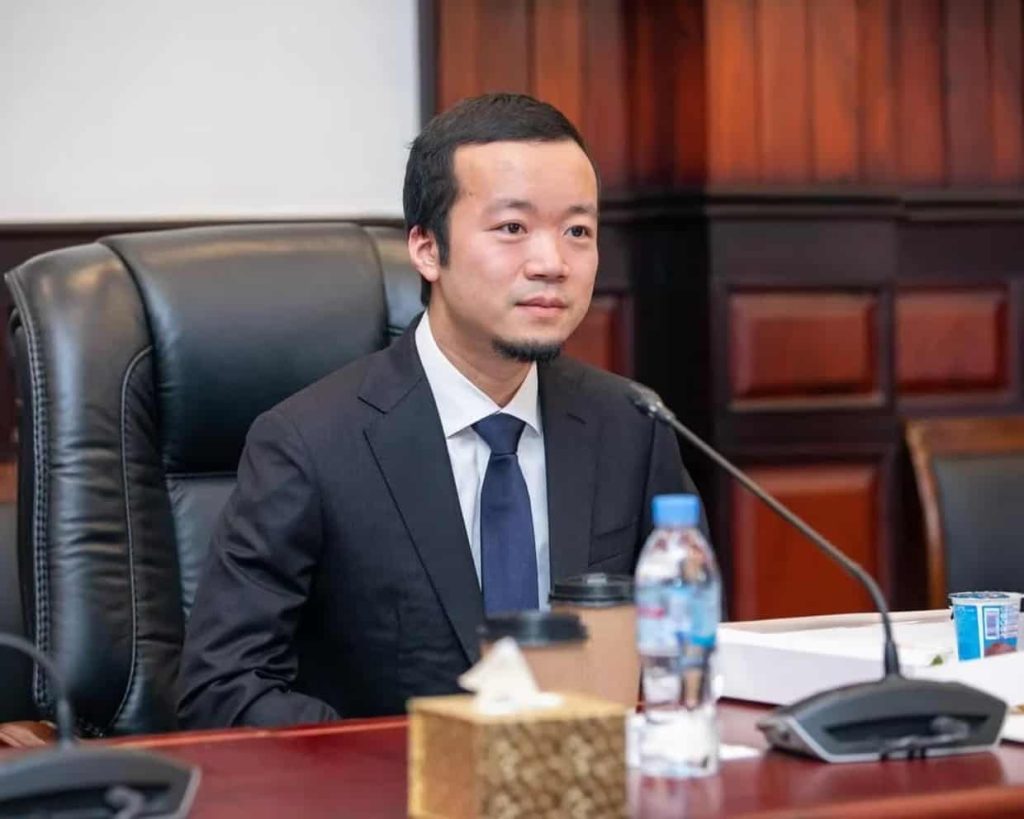
Chen Zhi, 38, who arrived in Cambodia in late 2010 or 2011, quickly established a conglomerate through real estate development, securing Cambodian citizenship in 2014 and later acquiring citizenships in Cyprus and Vanuatu. The public face included philanthropy, such as funding scholarships and COVID-19 donations, leading to him receiving the highest title bestowed by the Cambodian King, “Neak Oknha,” in 2020 for a donation of at least $500,000. However, this glittering façade allegedly concealed an empire “built on human suffering”.
Deep Fraud Mechanism: The Convergence of Tech and Trafficking
The financial engine driving the Prince Group’s TCO was a sophisticated two-part system combining industrial-scale human trafficking with technology-enabled cryptocurrency fraud.
The Core Deception: Pig Butchering Scams
The specific mode of cybercrime perpetrated by the network is commonly known as a “pig butchering” scam.
This fraud involves malicious actors building trust with unwitting victims, often contacted via social media or messaging platforms, over an extended period,. Once this trust is established, the victims are manipulated into transferring their funds, typically cryptocurrency, to specific accounts controlled by the scheme, under the false promise that the money will be invested in highly profitable, fake trading platforms. Prosecutors allege that the funds were simply stolen and laundered for the perpetrators’ benefit.
Industrializing Abuse: The Forced Labor Camps
To execute these scams on a massive, global scale, Chen’s operation relied on forced-labor scam compounds located throughout Cambodia.
These facilities housed workers, often trafficked after being lured by fake high-paying job advertisements, who were then detained against their will. Described in indictments as “prison-like compounds” or “violent forced labor camps,” these sites were surrounded by high walls and barbed wire. Workers were forced to carry out the online fraud schemes under the constant “threat of violence” and torture if they failed to meet performance quotas or tried to escape.
Chen Zhi was allegedly directly involved in the management of these compounds, maintaining records of profits and detailing the fraudulent schemes being run out of specific rooms,. Authorities recovered documents depicting “phone farms”—automated call centers equipped with 1,250 mobile phones managing 76,000 accounts on popular social media platforms—used to facilitate the massive fraudulent operation. Furthermore, evidence indicates Chen was aware of the violence, possessing images of beatings and torture, and providing direct instructions to subordinates, cautioning them specifically not to beat those causing trouble “to death”.
The Financial Nexus: Laundering Billions in Crypto
The reported scale of the operation’s success was staggering: prosecutors estimate that Chen Zhi and his associates were making up to $30 million every day at the peak of their power. The magnitude of this illicit revenue necessitated a global and technologically advanced laundering pipeline.
Sophisticated Cryptocurrency Obfuscation
The TCO leveraged the anonymity of cryptocurrency to obscure the origins of the stolen funds. Chen’s network employed sophisticated “spraying” and “funneling” techniques,. This involved repeatedly disaggregating large volumes of crypto across numerous virtual currency addresses (spraying) before re-consolidating them into fewer addresses (funneling) to effectively conceal the source of the profits.
The funds were often held in unhosted cryptocurrency wallets whose private keys Chen Zhi personally controlled. In fact, Chen allegedly bragged that his cryptocurrency mining businesses generated “considerable” profit “because there is no cost”—meaning the entire operating capital consisted of money stolen from victims.
The Facade of Legitimacy and Luxury
Criminal proceeds were meticulously channeled through Prince Group’s extensive network of ostensibly legitimate businesses, which operated in over 30 countries. These legal fronts included real estate, financial services, online gambling, and cryptocurrency mining operations.

This illicit cash flow was used for extravagant global purchases, including:
- Luxury Real Estate: A £12 million mansion in North London and a £95 million office block in the City of London’s financial district.
- High-Value Assets: Private jets, superyachts, vacation homes, and high-end collectibles.
- Rare Artwork: A Picasso painting purchased through an auction house in New York City.
The use of jurisdictions like Singapore, Hong Kong, and Taiwan was strategic, as they provided access to sophisticated banking, corporate service providers, and family office structures that facilitated complex money laundering operations, a practice sometimes referred to as ‘Singapore Washing’. Entities sanctioned by the U.S. Treasury included Hong Kong and Singaporean companies that served as conduits for these proceeds,.
Red Flags and Political Immunity
The seamless operation of a crime network of this size, relying on compounds that Amnesty International documented as engaging in torture, could not have persisted without powerful external protection,. The true red flag was Chen Zhi’s deep entrenchment within Cambodia’s political establishment.
Political Entrenchment
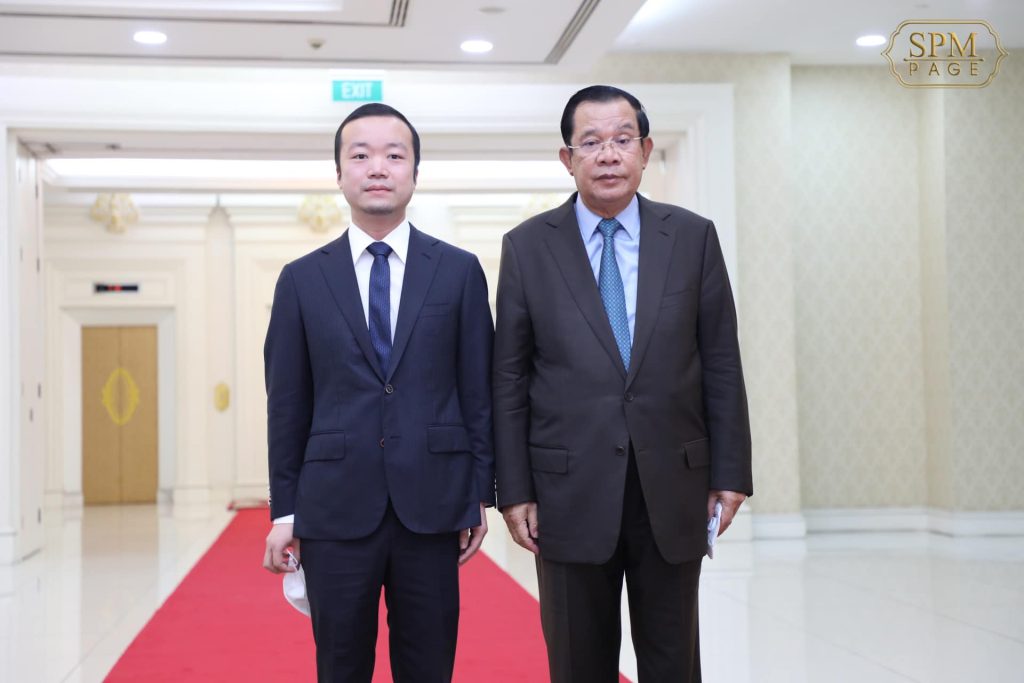
Chen’s rapid acquisition of political influence and official status served as the primary means of ensuring impunity for his criminal enterprises.
- He held advisory roles to Cambodia’s political elite, including former Prime Minister Hun Sen and his successor, Hun Manet.
- He was an official adviser to the Interior Minister Sar Kheng starting in 2017 and a business partner with Sar Kheng’s son, Sar Sokha, in ventures like the Jinbei Casino,.
- Prosecutors allege that Chen and his executives actively paid bribes to public officials in multiple foreign countries to protect their criminal operations and avoid disruption by law enforcement.
Experts characterize Chen Zhi not as a traditional mob boss, but as “the polished face of a state-protected criminal economy“,. The analyst consensus suggests that Chen’s ability to build a multi-billion dollar corporate empire in a short period, surviving multiple domestic scandals untouched, “makes sense only if you assume state backing”. This political shield allowed the forced-labor camps to operate with impunity, effectively granting the TCO total control over their abused workforce.
Institutional Warnings
The Prince Group faced scrutiny prior to the 2025 sanctions. Chinese investigations dating back to 2020 labeled the Prince Group a “notorious transnational online gambling criminal group”, even though the company consistently denied involvement, attributing accusations to fraud impersonation. Furthermore, journalists raised concerns over the unclear source of Chen’s funding, noting that he claimed an unnamed uncle provided $2 million to start his first company in 2011, but provided no evidence,. This lack of financial transparency regarding the source of his massive, rapidly accumulating wealth constituted a glaring operational red flag that international gatekeepers failed to address.
Global Containment and Legal Status
The U.S. and U.K. coordinated crackdown has ignited a widespread, international campaign aimed at dismantling the TCO’s global infrastructure.
The International Legal Front
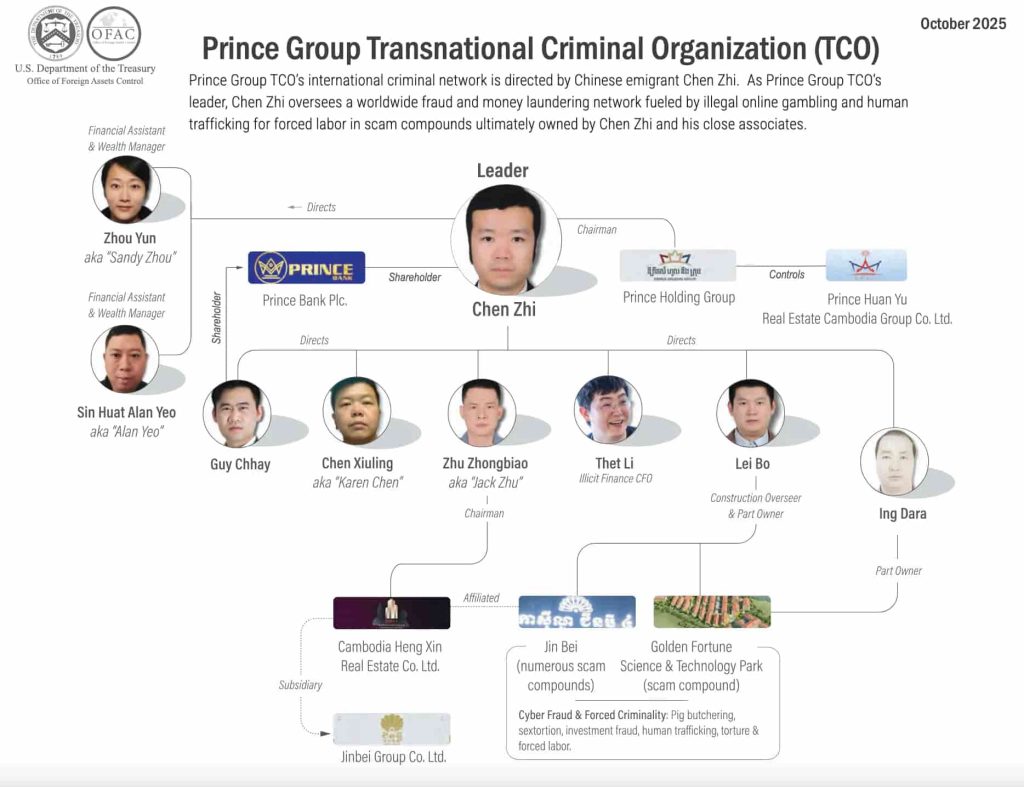
The U.S. Department of the Treasury designated Prince Group as a TCO and sanctioned Chen Zhi, 146 associates, and over 100 associated entities across various nations for their roles in illicit activities. The aim of this action is to lock Chen and his network out of the global financial system.
The resulting actions worldwide highlight the international scope of the TCO:
- United Kingdom: Froze Chen’s UK assets, including the £12 million mansion and the £95 million office block.
- South Korea: Imposed sanctions targeting 15 individuals and 132 entities linked to the network, marking South Korea’s first independent sanction measure regarding transnational crime. South Korean authorities froze concealed deposits exceeding 90 billion won (approximately $64 million) held in Korean banks’ Cambodian branches,.
- Singapore: Announced seizures and asset restraint orders totaling over S$150 million (about US$115 million), covering six properties, a yacht, and 11 cars. Singapore also initiated a money-laundering investigation and revoked tax privileges for family offices connected to the network.
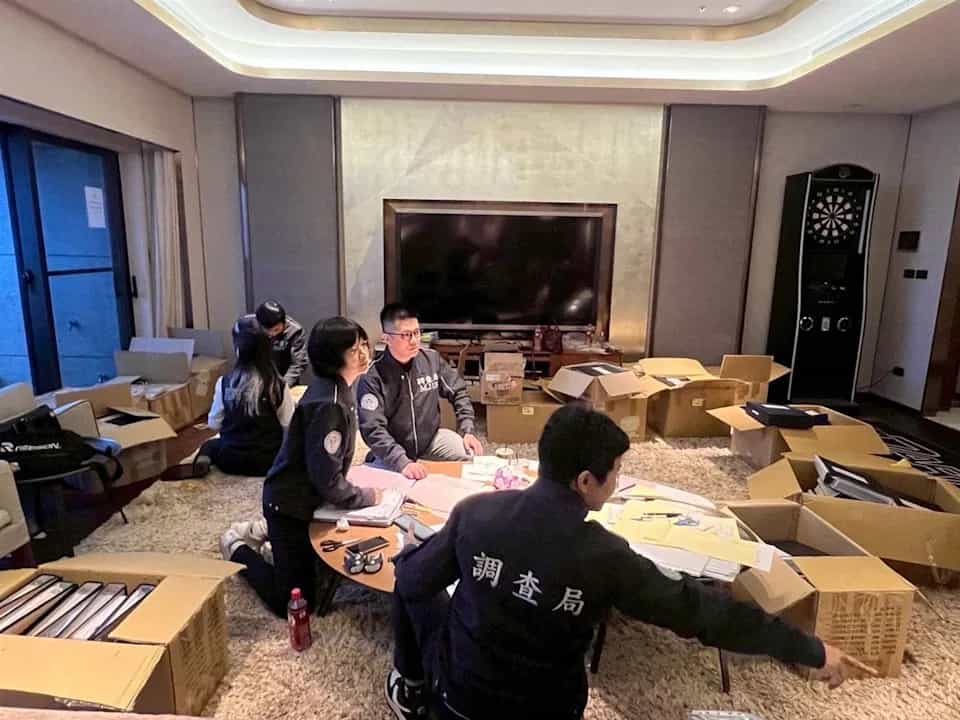
- Hong Kong and Taiwan: Hong Kong authorities froze assets totaling HK$2.75 billion (US$354 million),. Taiwan prosecutors seized assets, including luxury cars and 18 properties, estimated to be worth more than TWD 4.5 billion.
The Status of the Fugitive Kingpin
Chen Zhi was charged in absentia with wire fraud conspiracy and money laundering conspiracy and faces a maximum of 40 years in U.S. prison if convicted.
However, Chen Zhi remains at large. Since the sanctions were announced in October 2025, the enigmatic tycoon has vanished,. The Cambodian government, while asserting that the Prince Holding Group met all local legal requirements and Chen’s citizenship was legal, stated that it would cooperate only if a formal request supported by “sufficient evidence” was provided. Experts caution that Chen’s deep embedding within the Cambodian elite makes it difficult for the ruling party to truly distance itself from the alleged criminal leader,.
Writer’s Commentary
The spectacular, $15 billion success of Chen Zhi’s criminal empire stemmed from exploiting one fundamental technical vulnerability combined with one overarching psychological factor. The technical cause was the TCO’s ability to instantaneously convert human exploitation into anonymous, fungible wealth via cryptocurrency. The implementation of “pig butchering” scams, scaled using “phone farms” controlling tens of thousands of automated accounts, transformed human traffic victims into a high-efficiency digital workforce. Critically, the use of sophisticated crypto laundering techniques like “spraying” and “funneling” ensured that stolen assets became virtually untraceable across borders almost immediately, bypassing traditional banking defenses and allowing profits to flow into luxury assets before law enforcement could react. This rapid digital obfuscation was the technical bedrock. The psychological cause was the perceived total immunity fostered by state patronage. Chen’s status as a politically protected “Neak Oknha” adviser meant the TCO could operate industrial-scale forced labor camps with assured impunity. This political safety net allowed the organization to maximize profits through extreme coercion and violence, knowing that local law enforcement would not interfere. The blend of untraceable digital theft and state-sanctioned human abuse created an operational environment optimized for record-breaking criminal profit.
REFERENCES
- wikipedia – Prince Group
- rfa – US, UK sanction Cambodian conglomerate, alleging role in scam networks
- cnbc – DOJ seizes $15 billion in bitcoin from massive ‘pig butchering’ scam based in Cambodia
- justice – Chairman of Prince Group Indicted for Operating Cambodian Forced Labor Scam Compounds Engaged in Cryptocurrency Fraud Schemes